SCAR FIELD
Landscape Architecture & Ground Intervention — Middelheim Museum, Antwerp
Type: Landscape Architecture / Ecological Intervention
Site: Zone East, Middelheim Museum, Antwerp, Belgium
Programme: Public landscape/ circulation/ ecological field
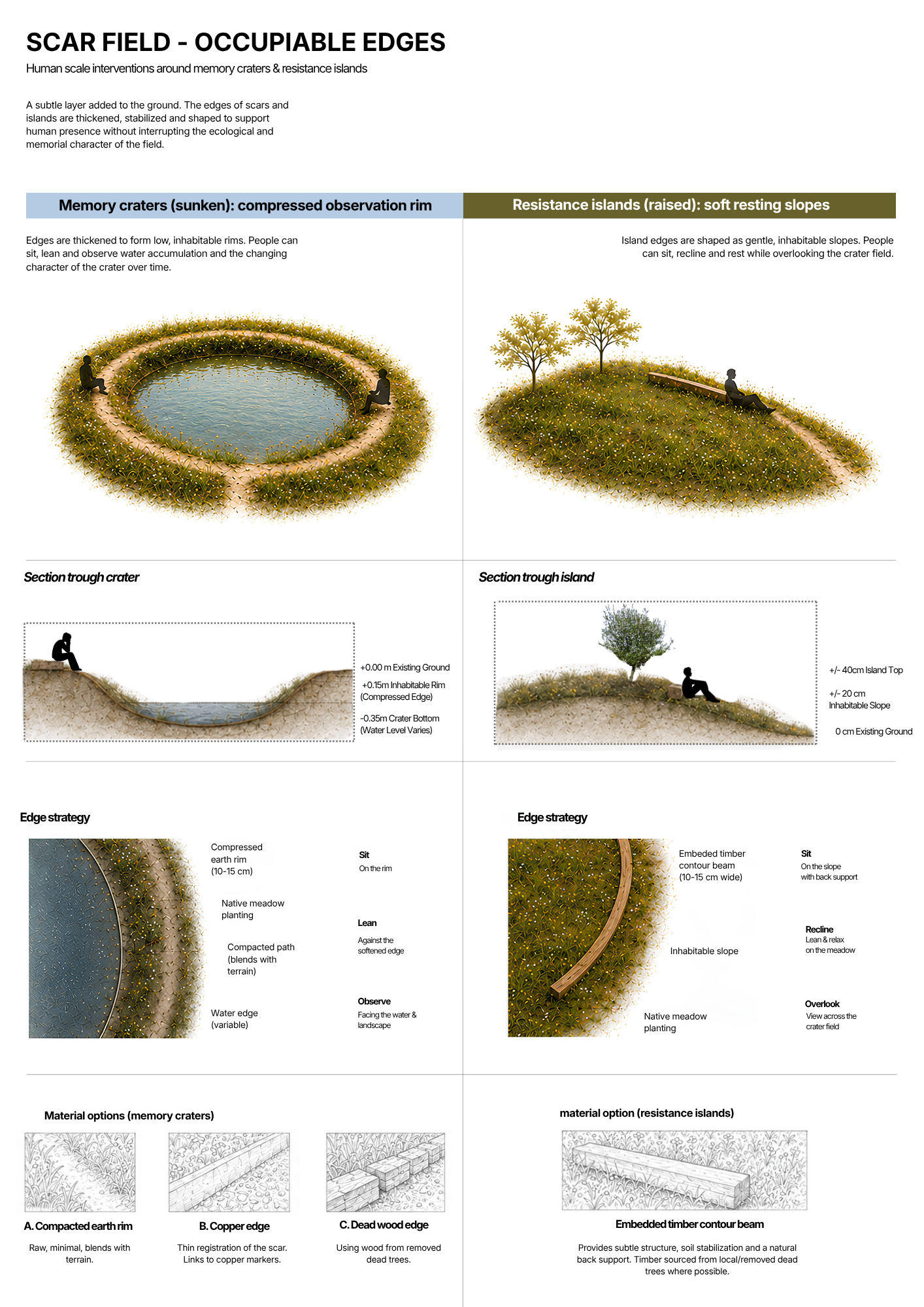
Main elements: Elephant paths, memory craters & resistance islands
Concept: Transforming existing traces of movement, ecological decline and infrastructural constraints into a dynamic landscape that records and evolves through use, growth, decay and remembrance.
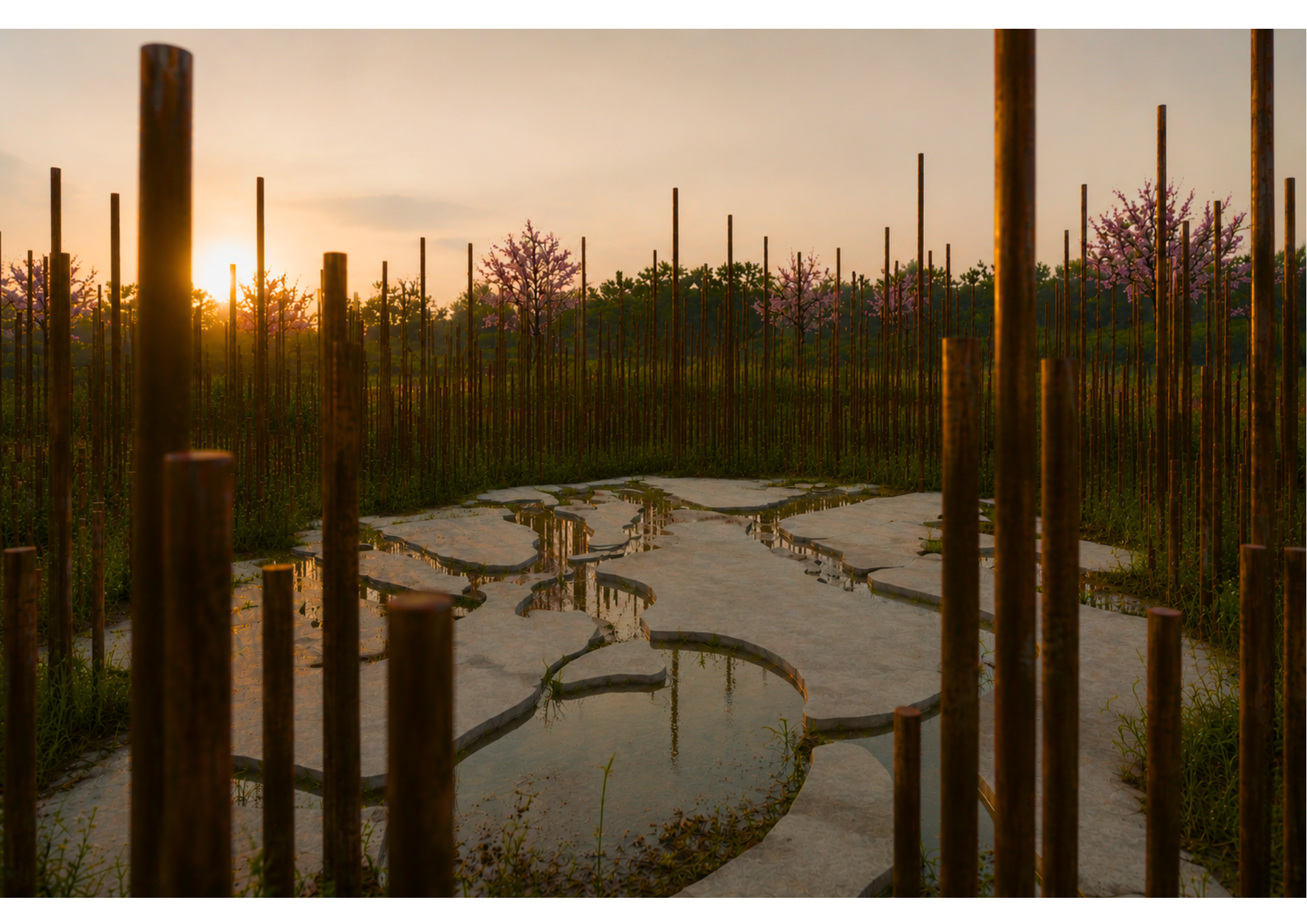
A landscape shaped by what remains.
A landscape shaped by what remains.
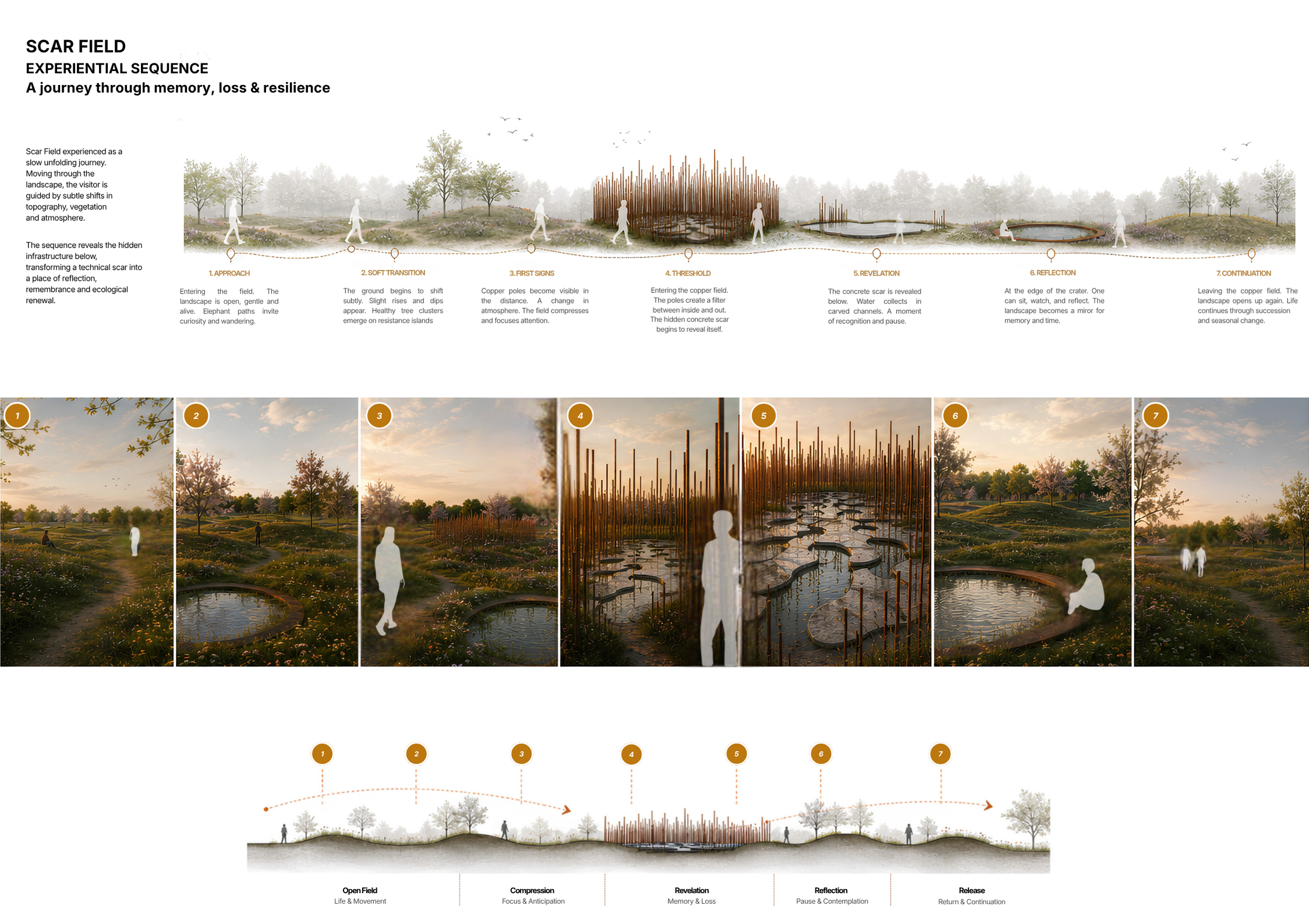
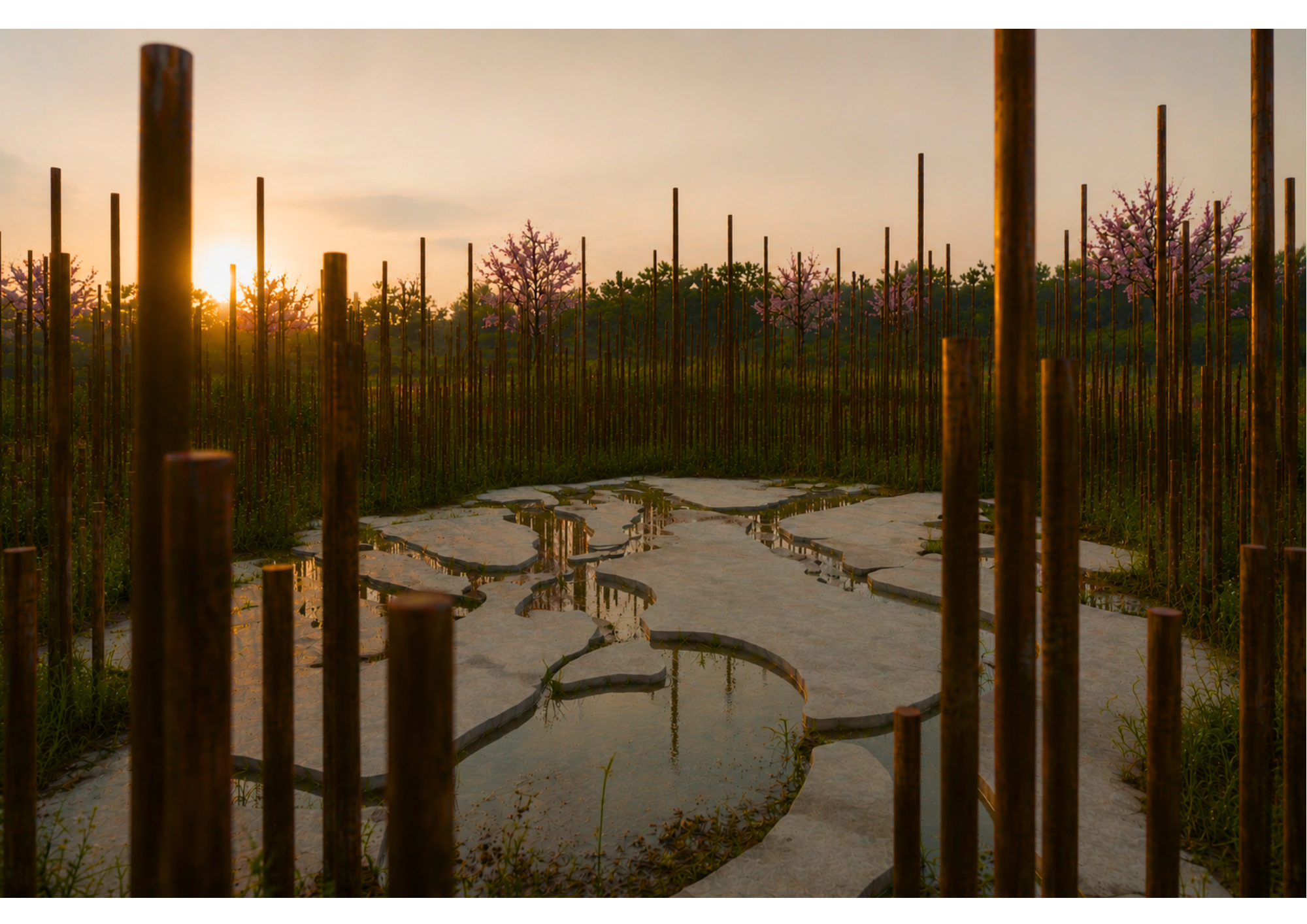
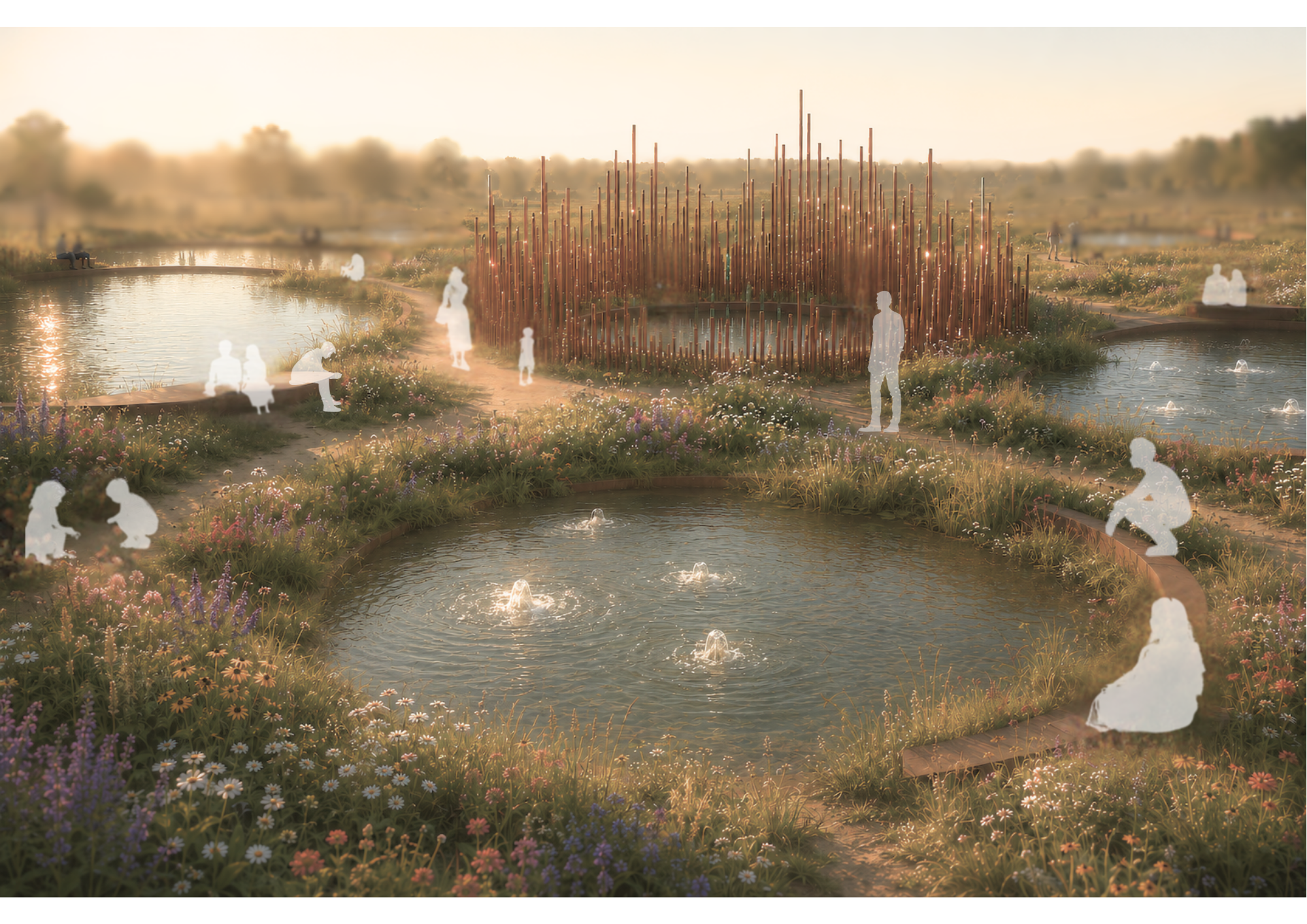
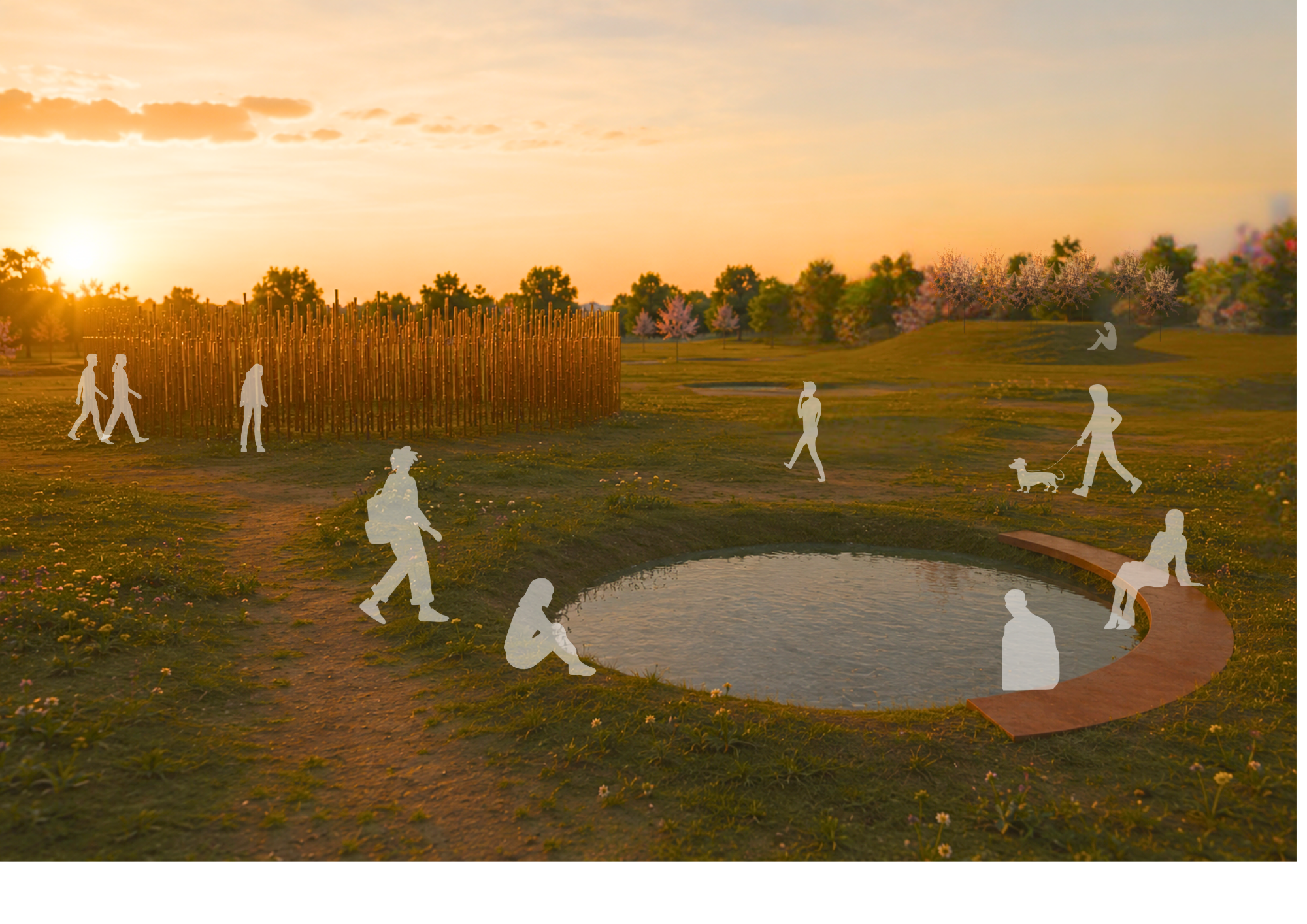
Scar Field transforms existing traces of movement, ecological loss and infrastructural constraints into a landscape of paths, memory craters and resistance islands. Rather than imposing a fixed composition, the intervention works with the forces already present in the field, allowing water, vegetation, movement and decay to continuously reshape the site.
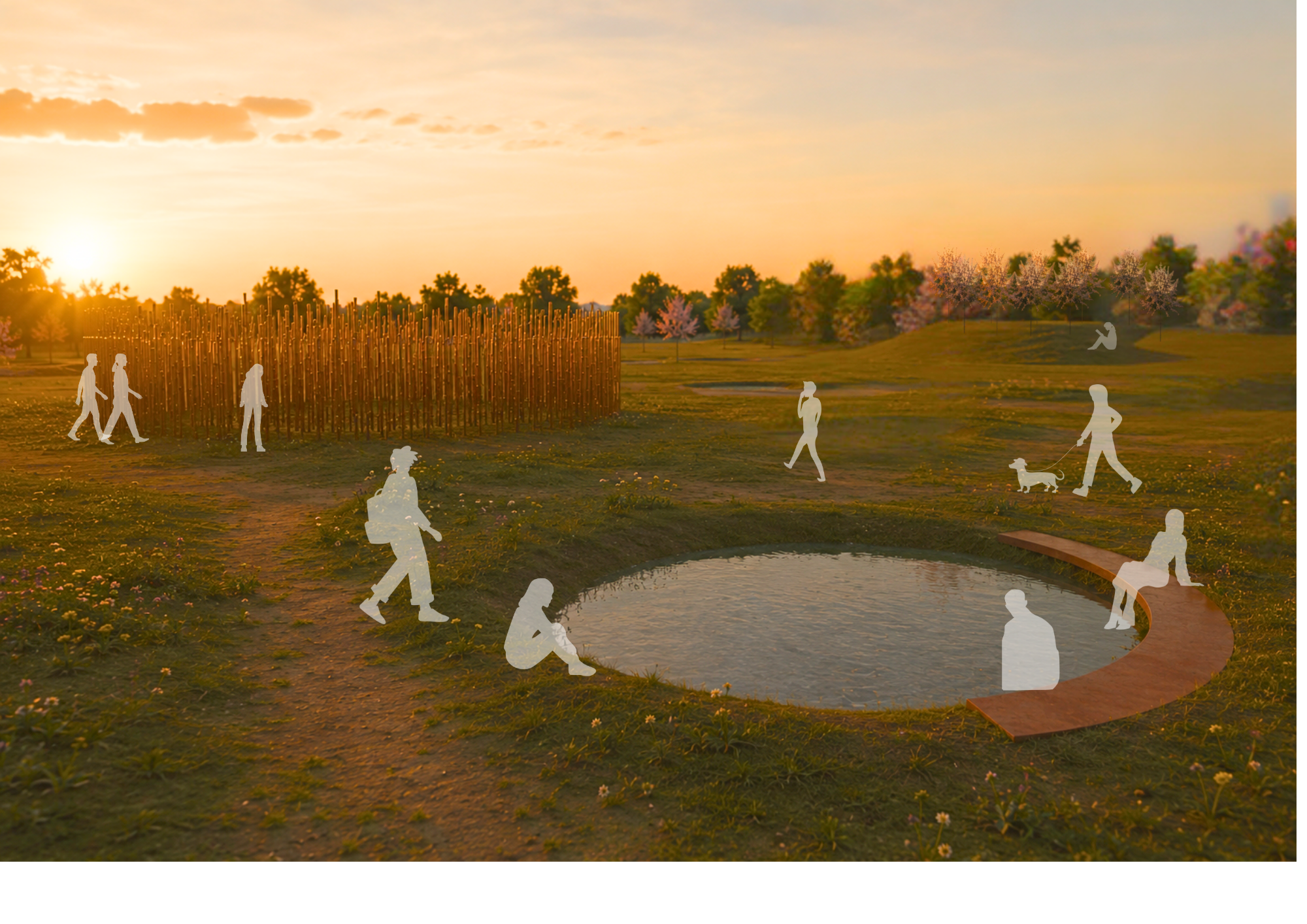
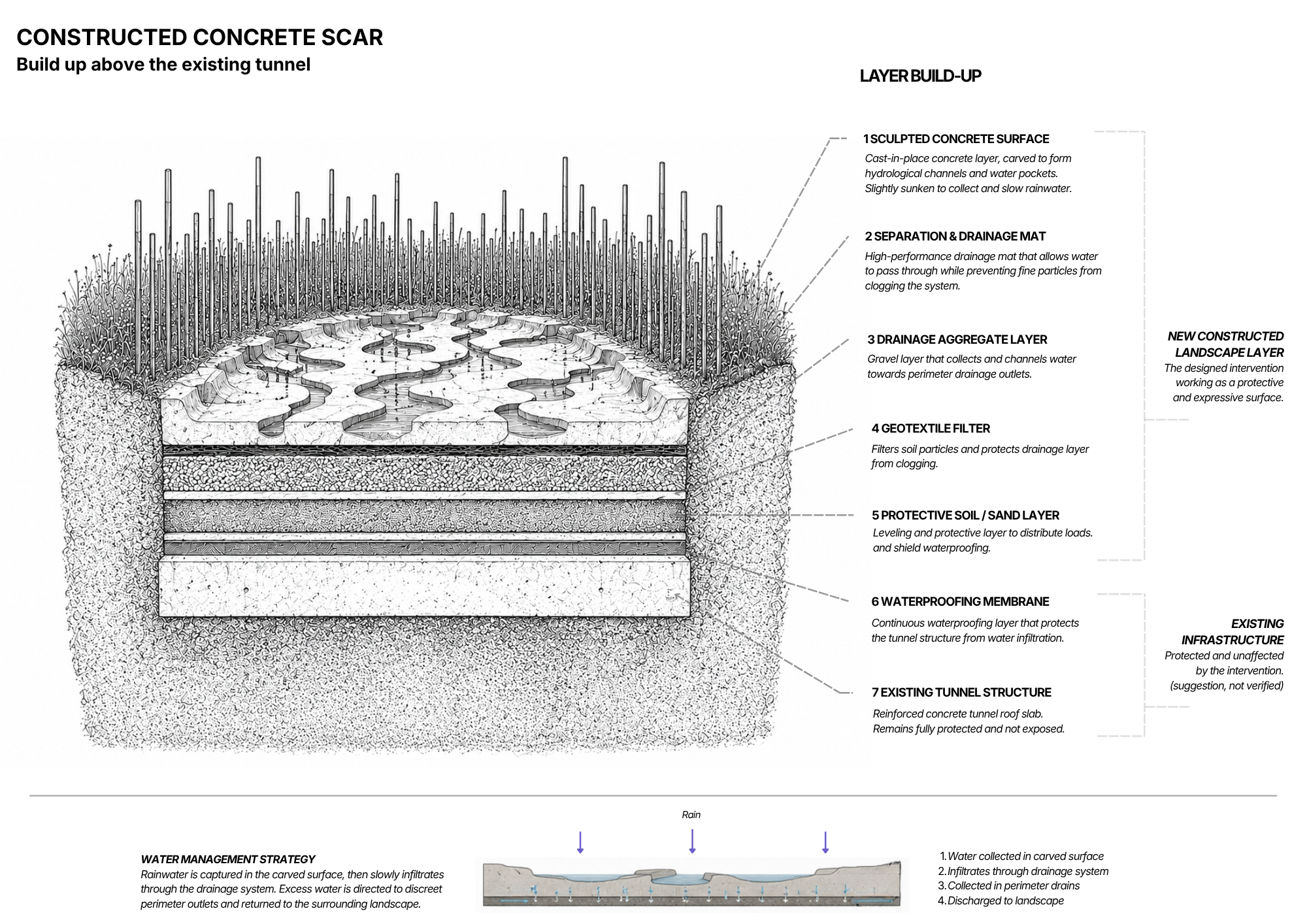
Some scars are constructed. Others are allowed to evolve.
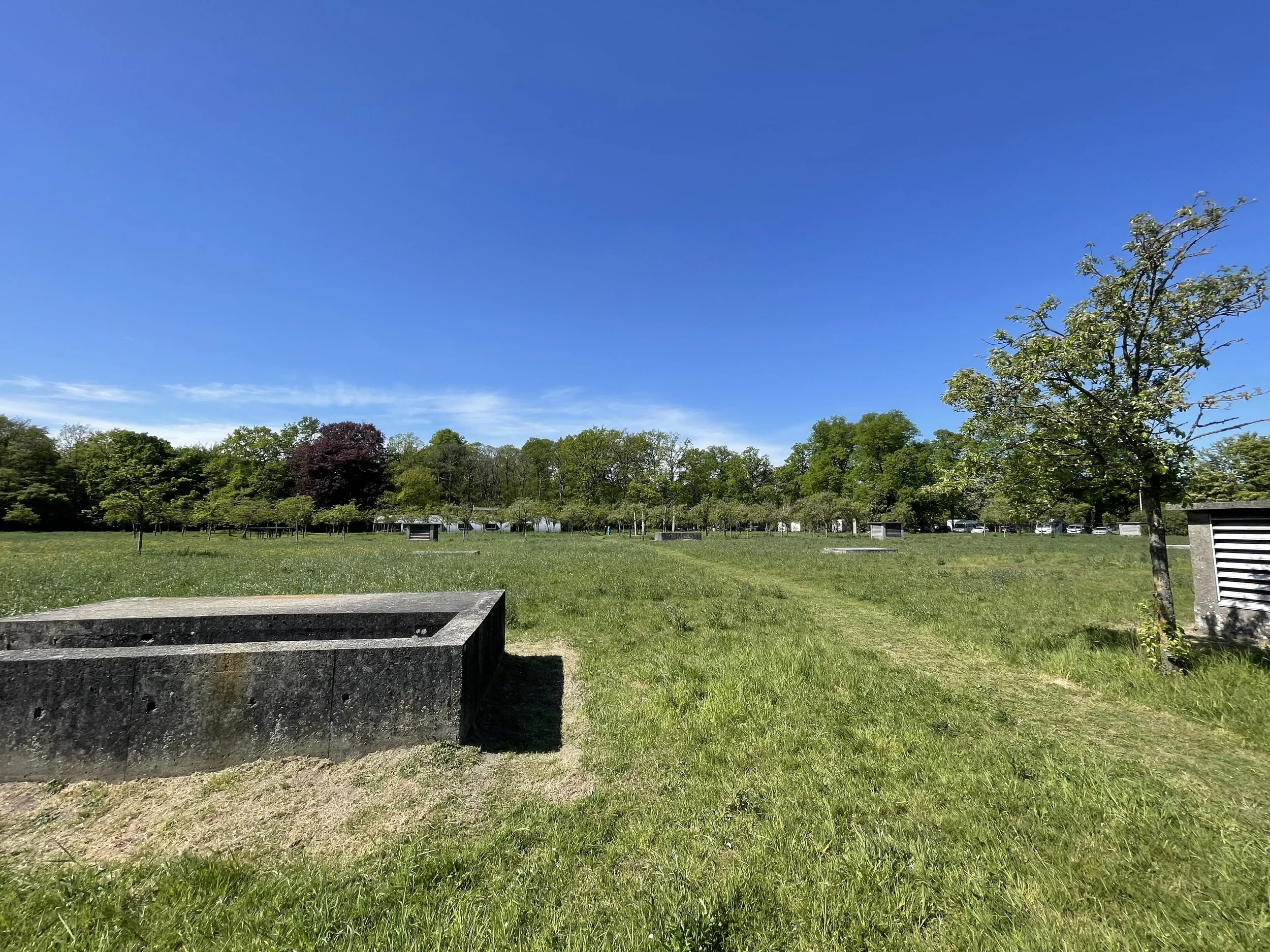
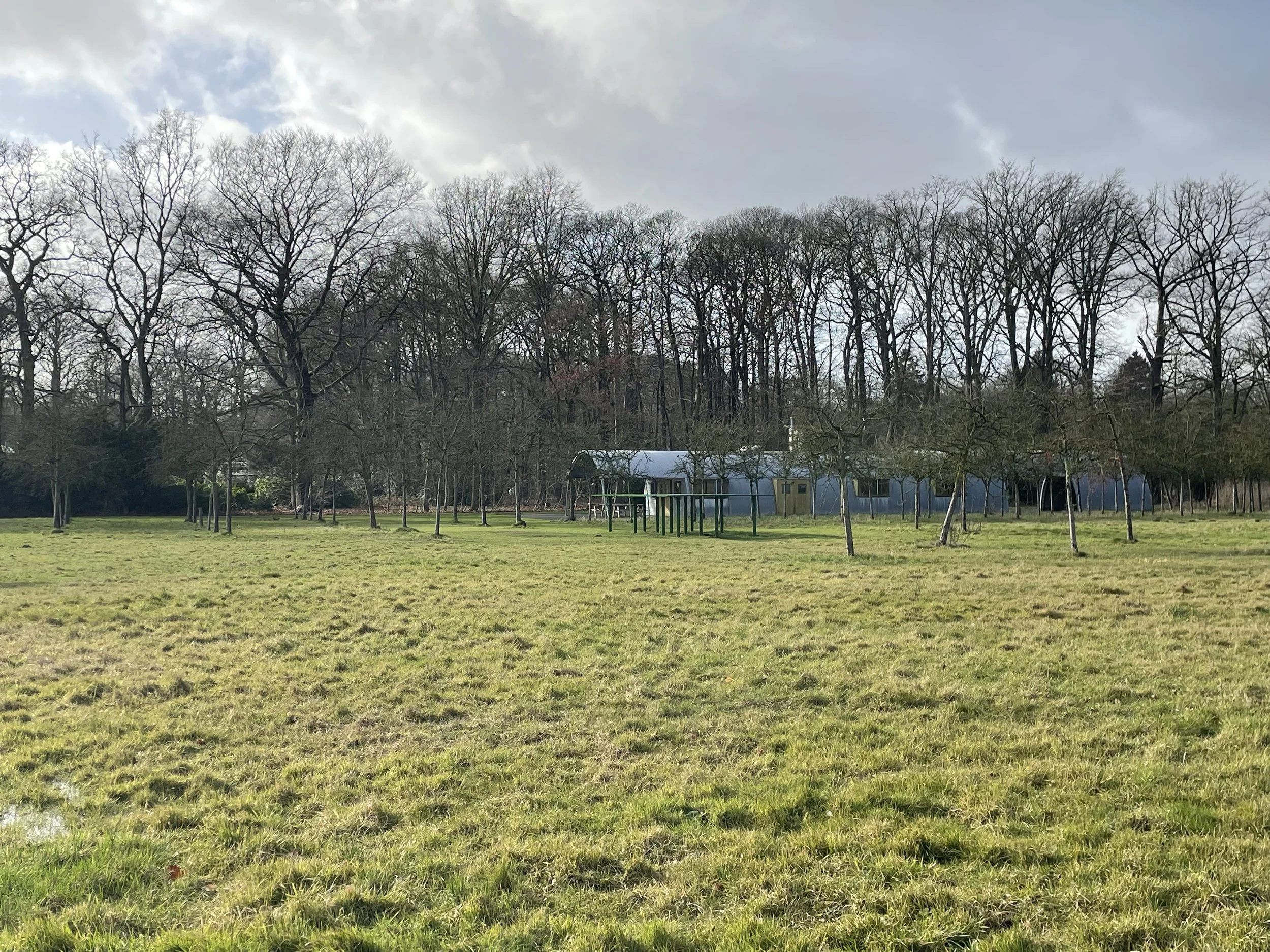
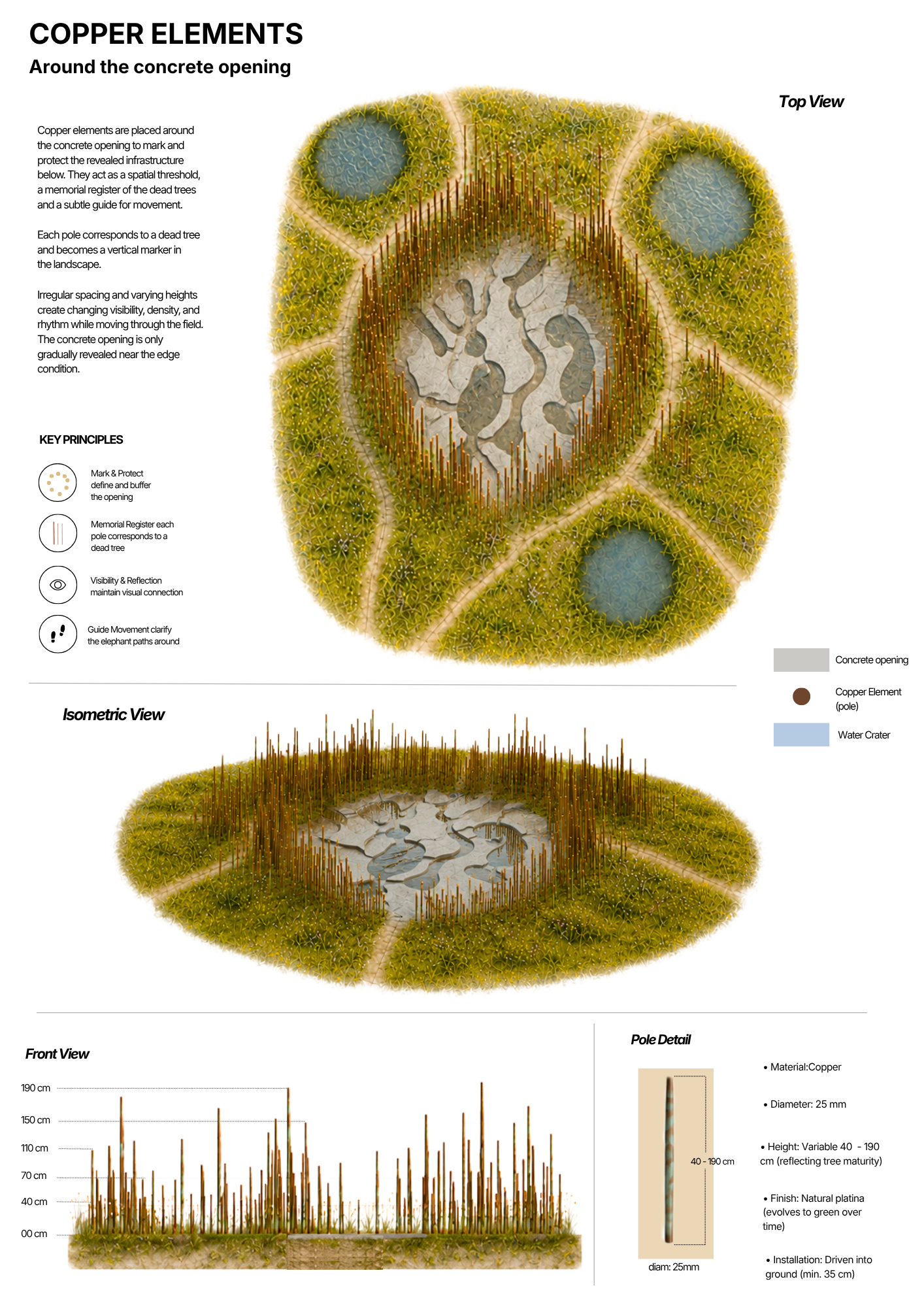
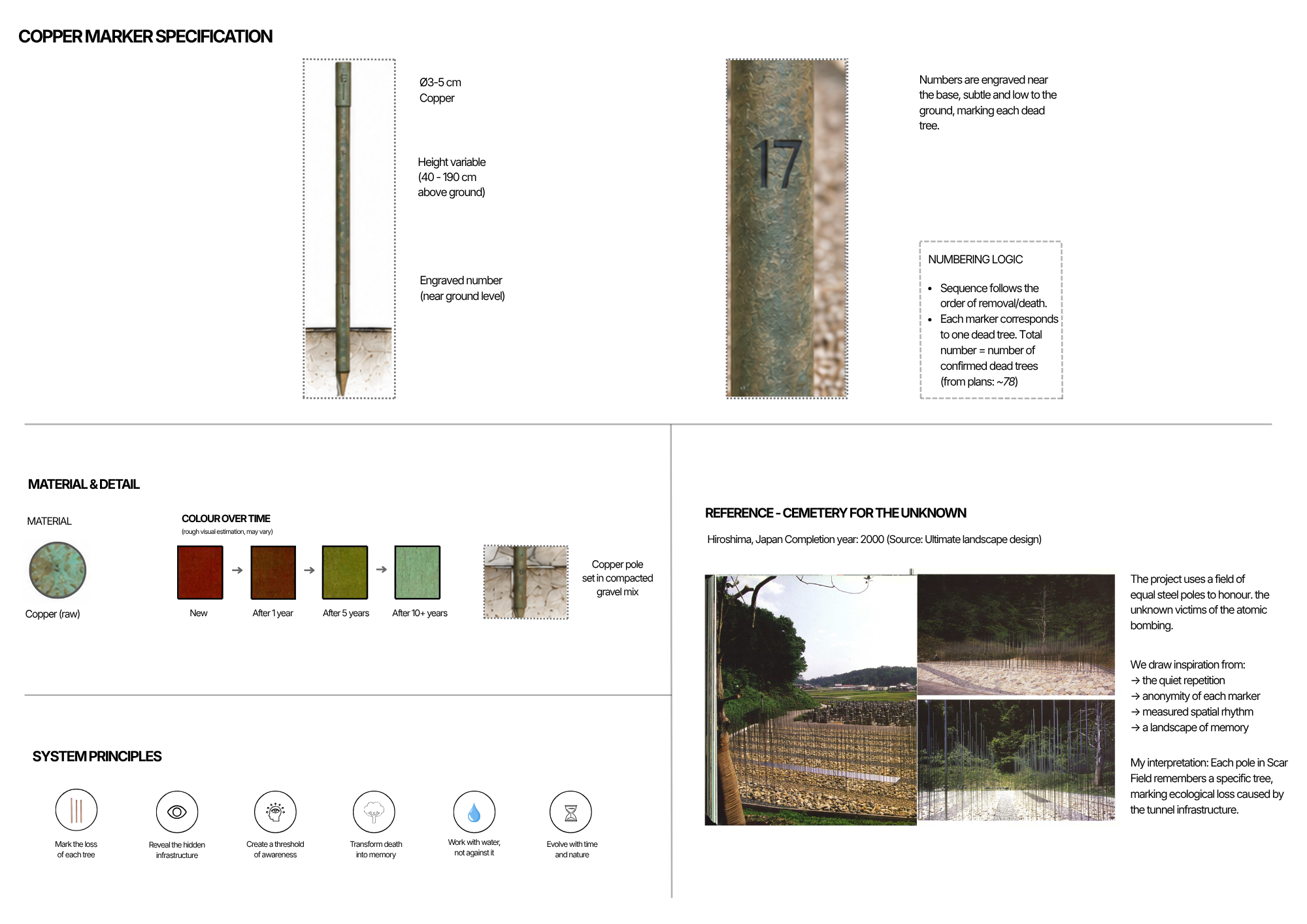
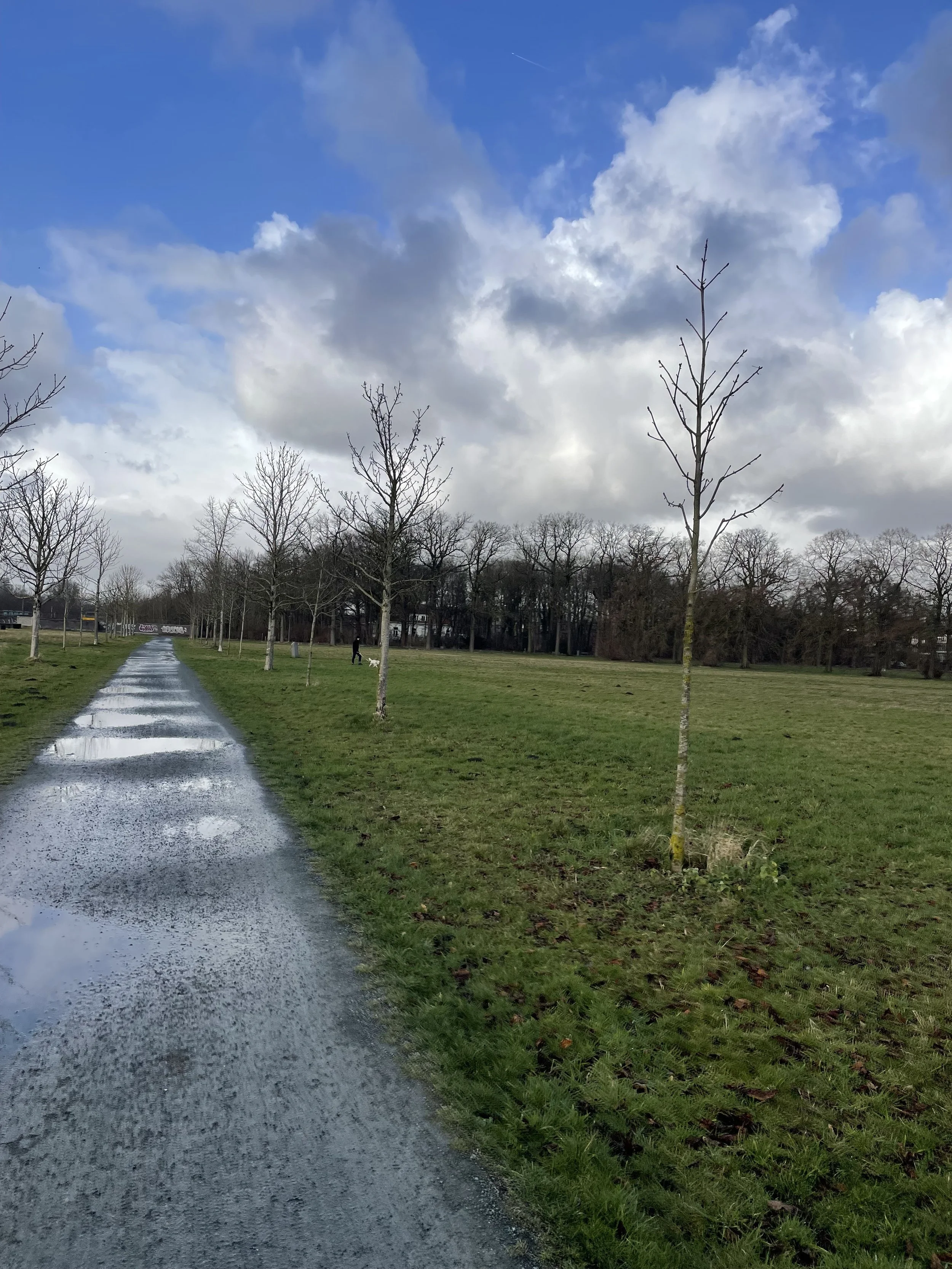
Many of the original planted trees by M. Desvigne are dead
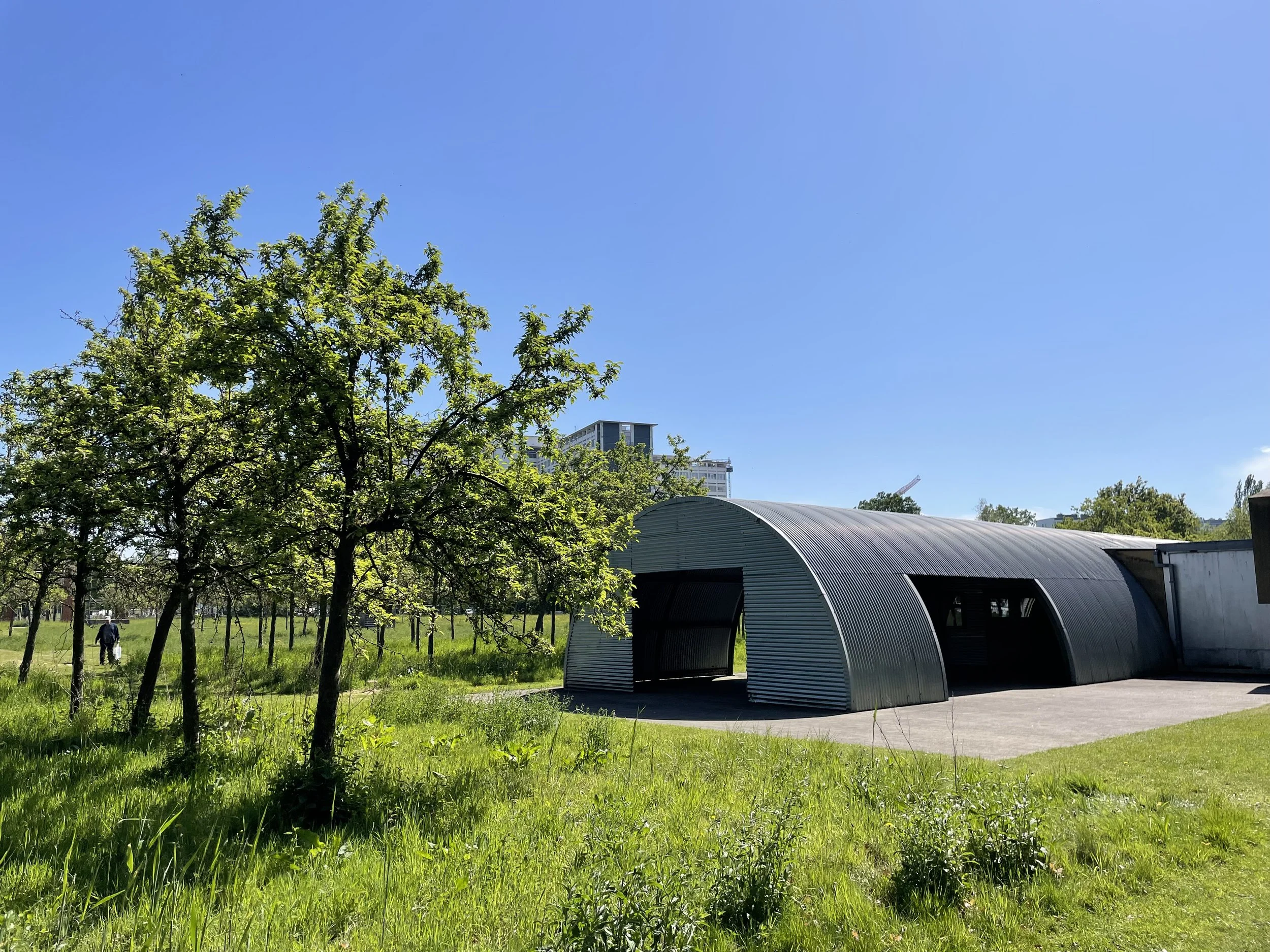
Visible man-made (elephant) paths to shorten the route
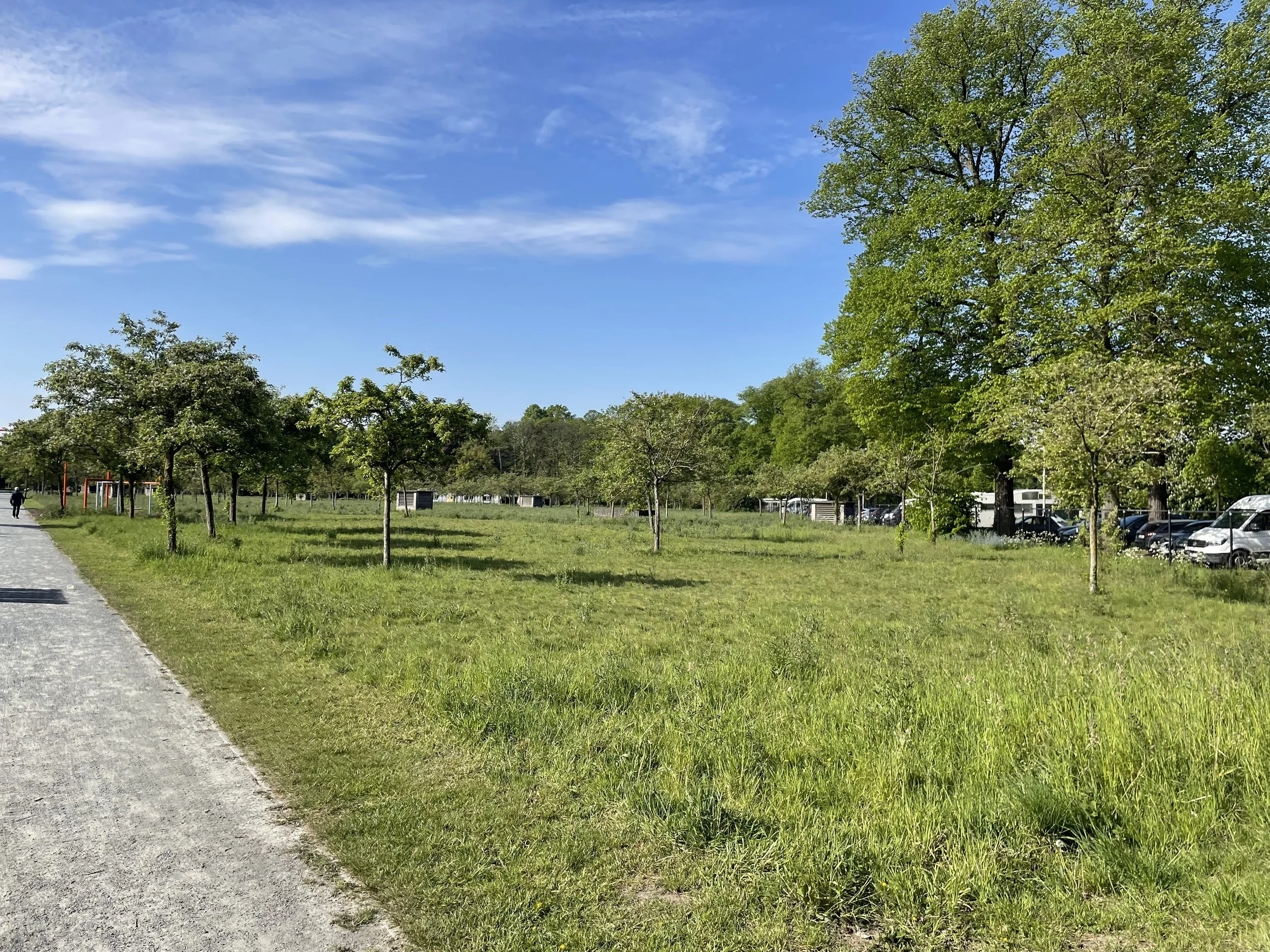
Reading the Existing Field
Before intervention, the field already contained a spatial logic.
A dispersed structure of Malus trees, existing paths, open grassland and infrastructural elements creates a landscape shaped by movement, ecological variation and changing conditions. Rather than imposing a new geometry, Scar Field begins by identifying and intensifying these existing traces.
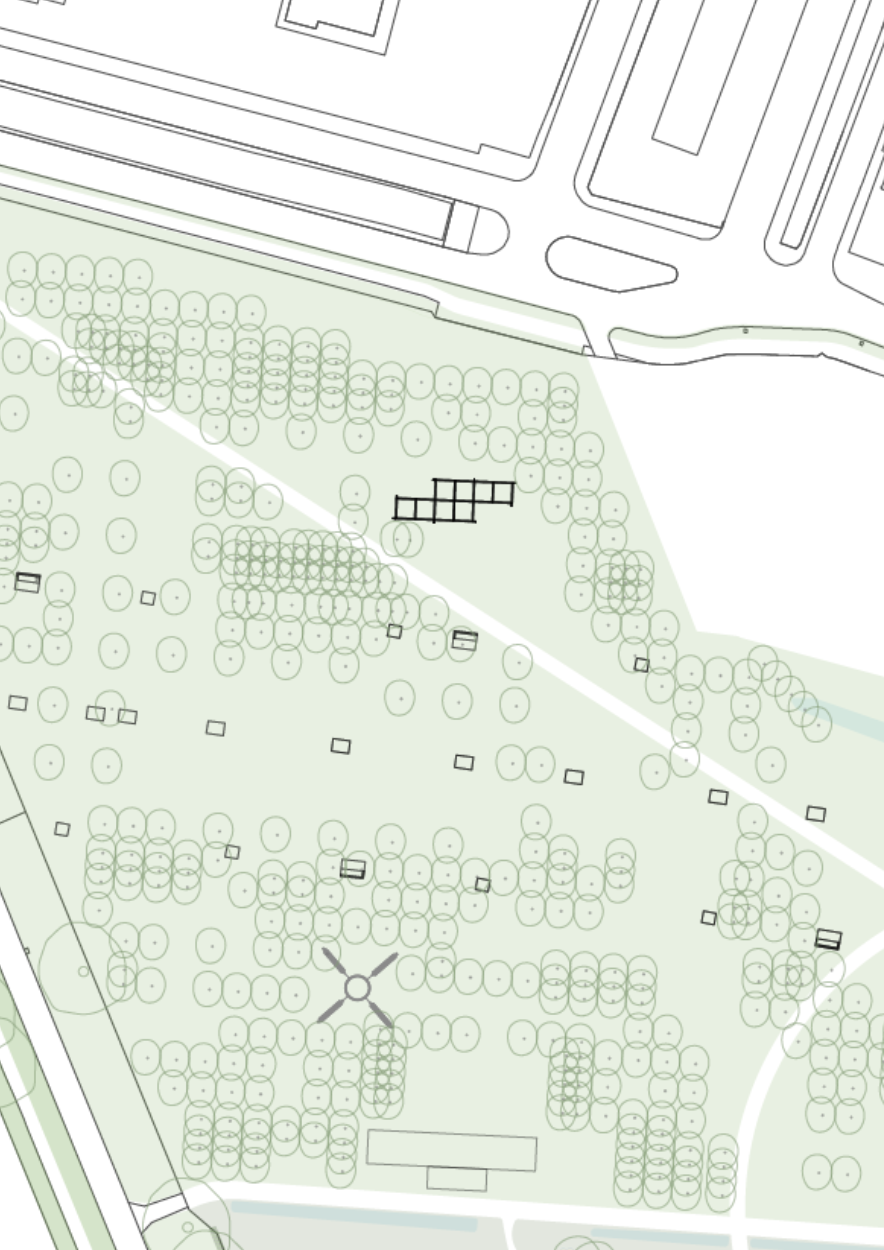
Original plan, provided by the Museum, showing all the originally planted Malus trees. Now, around 80% are dead
Existing artwork (Atelier van Lieshout)
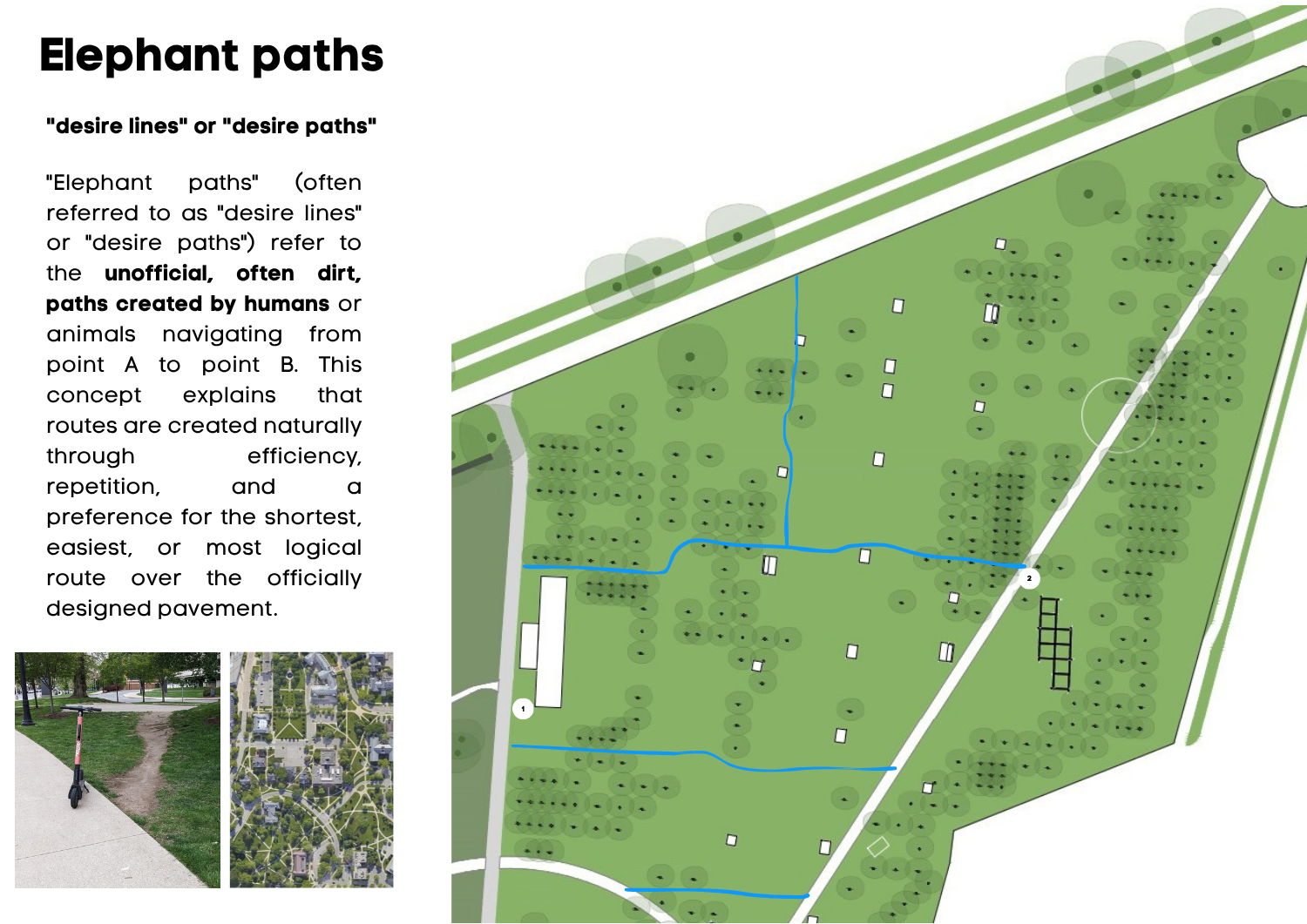
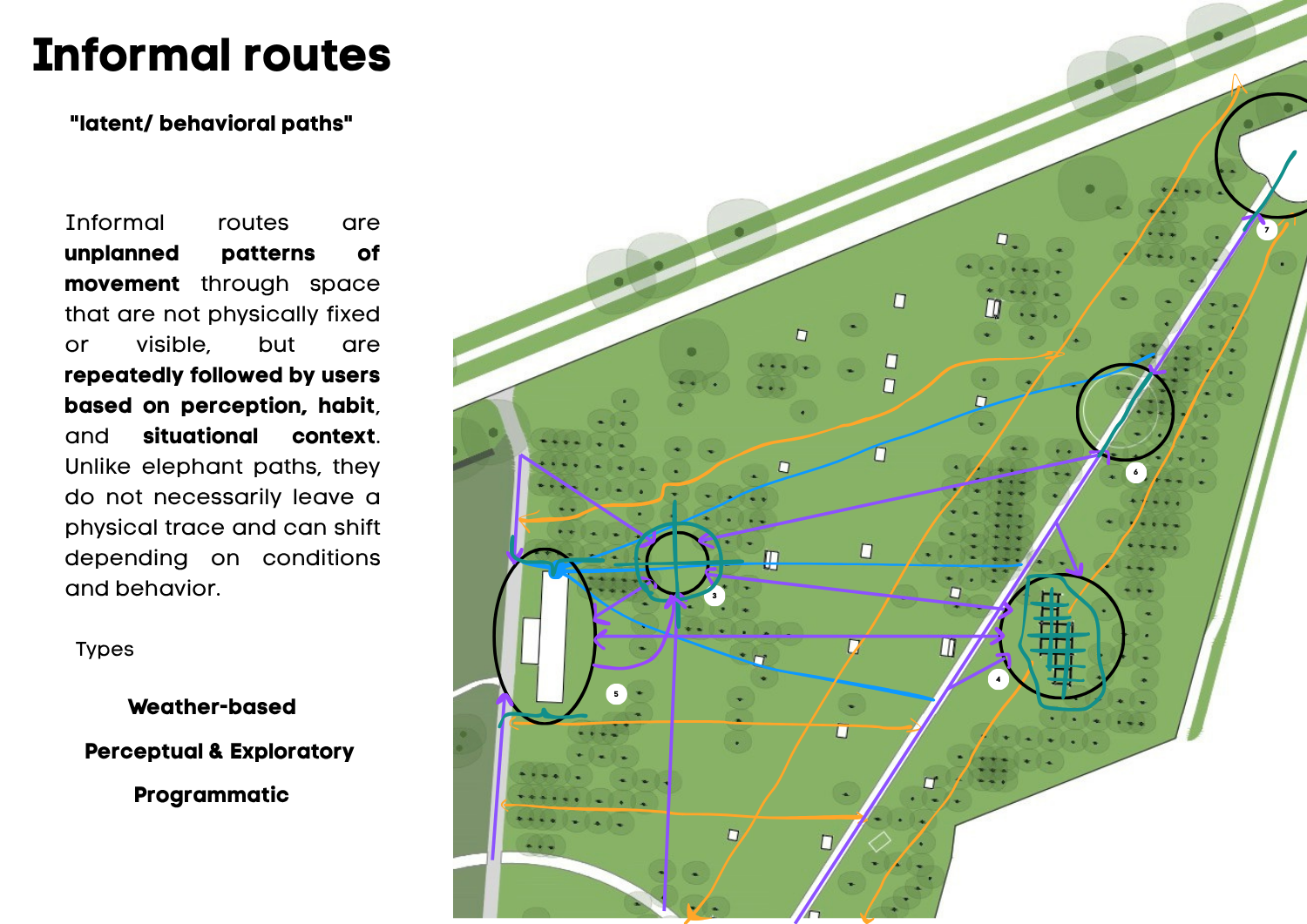
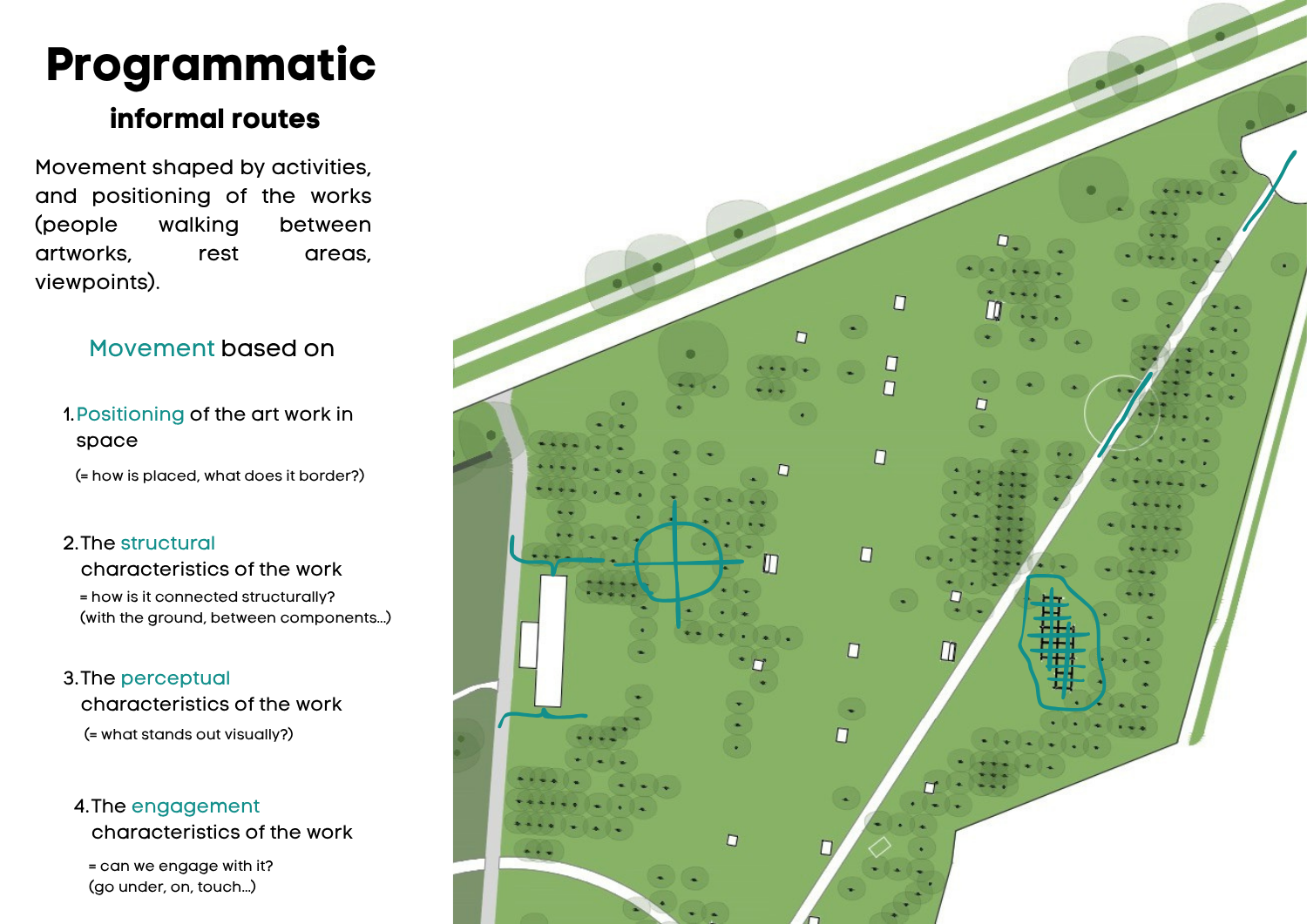
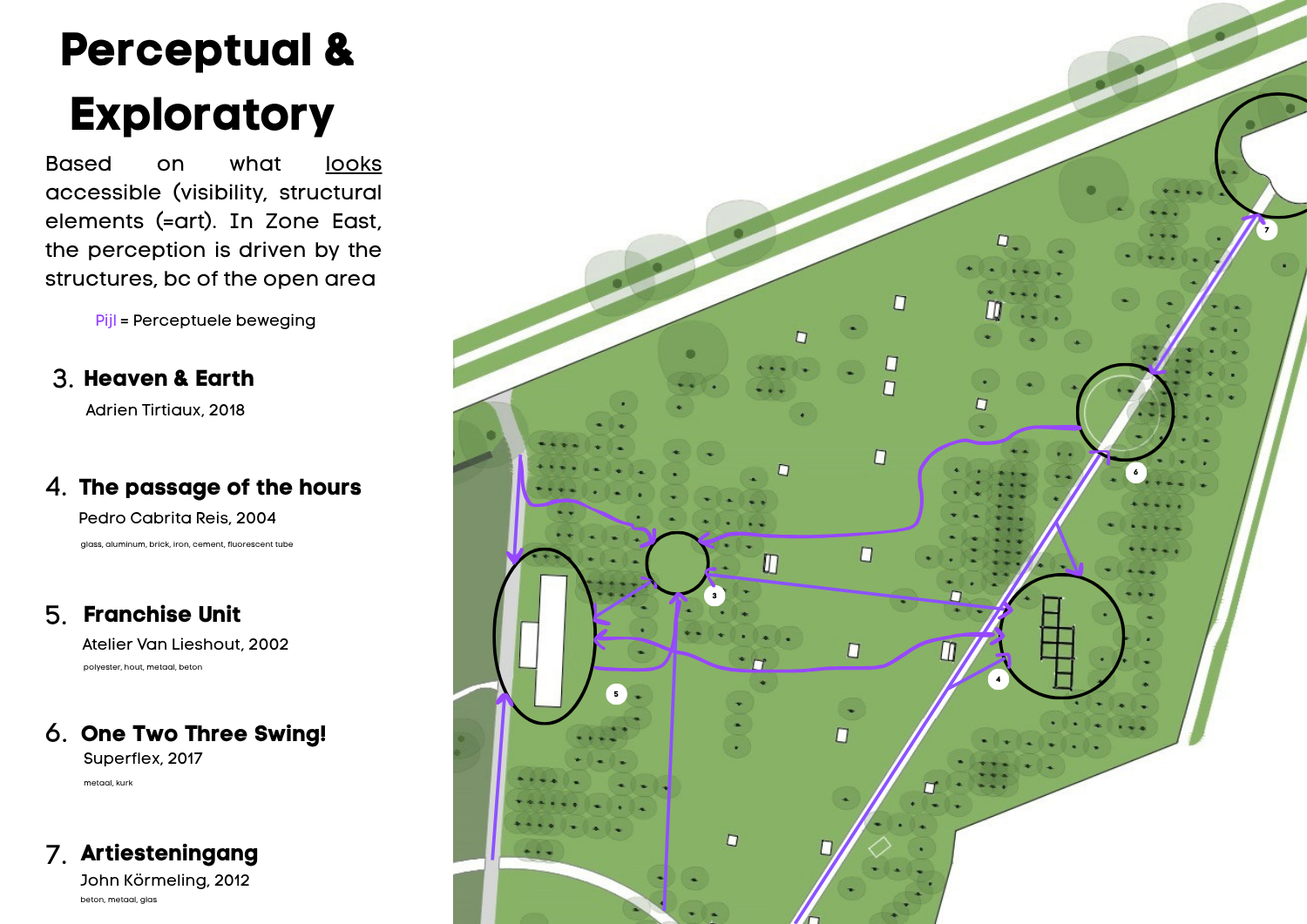
Site Analyses
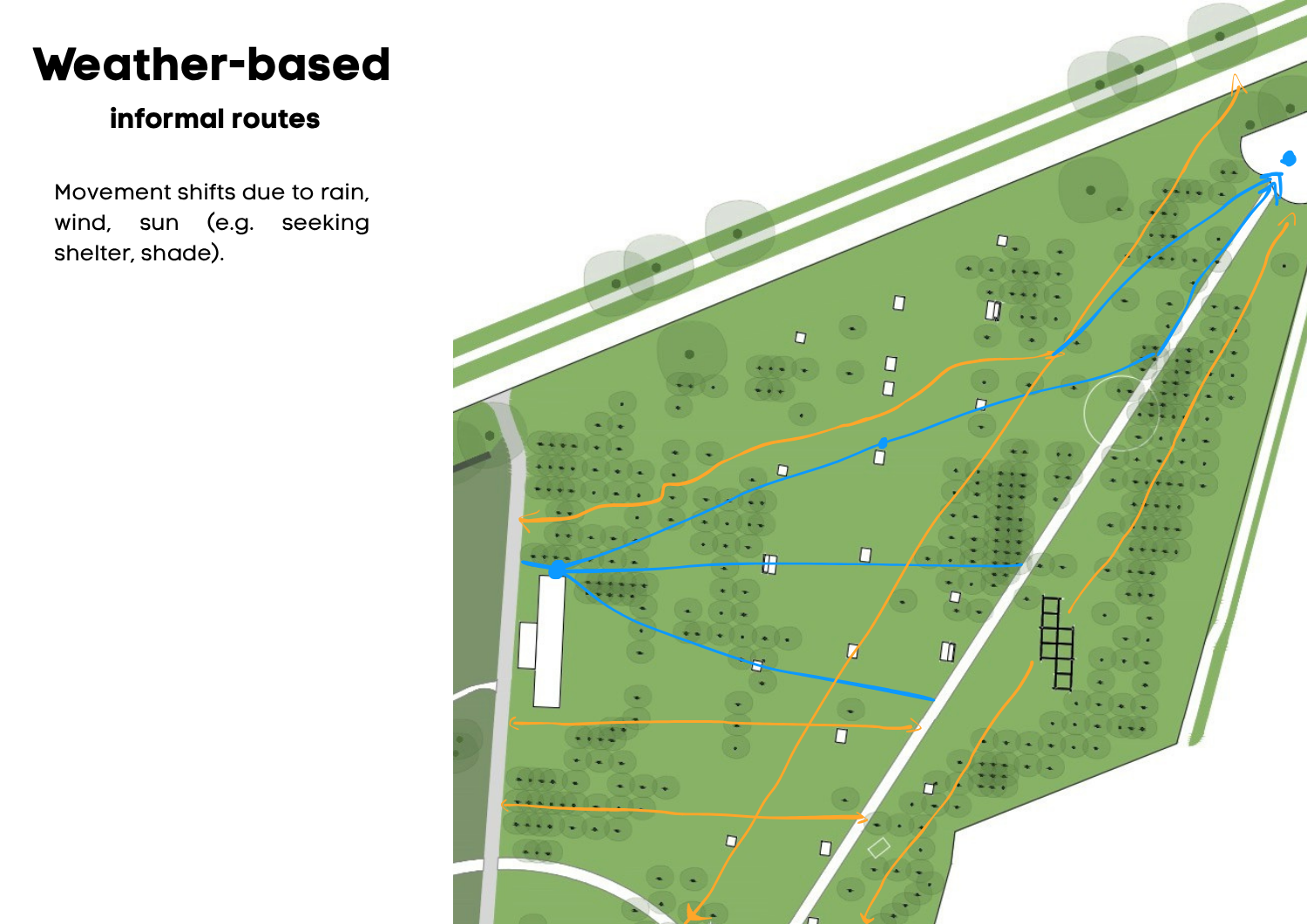
Before introducing an intervention, the existing landscape is read through the ways people experience and move through it. The site is analysed through four interconnected conditions: program, perception, weather and behaviour. Together, these reveal the visible and latent routes that already shape how the landscape is used.
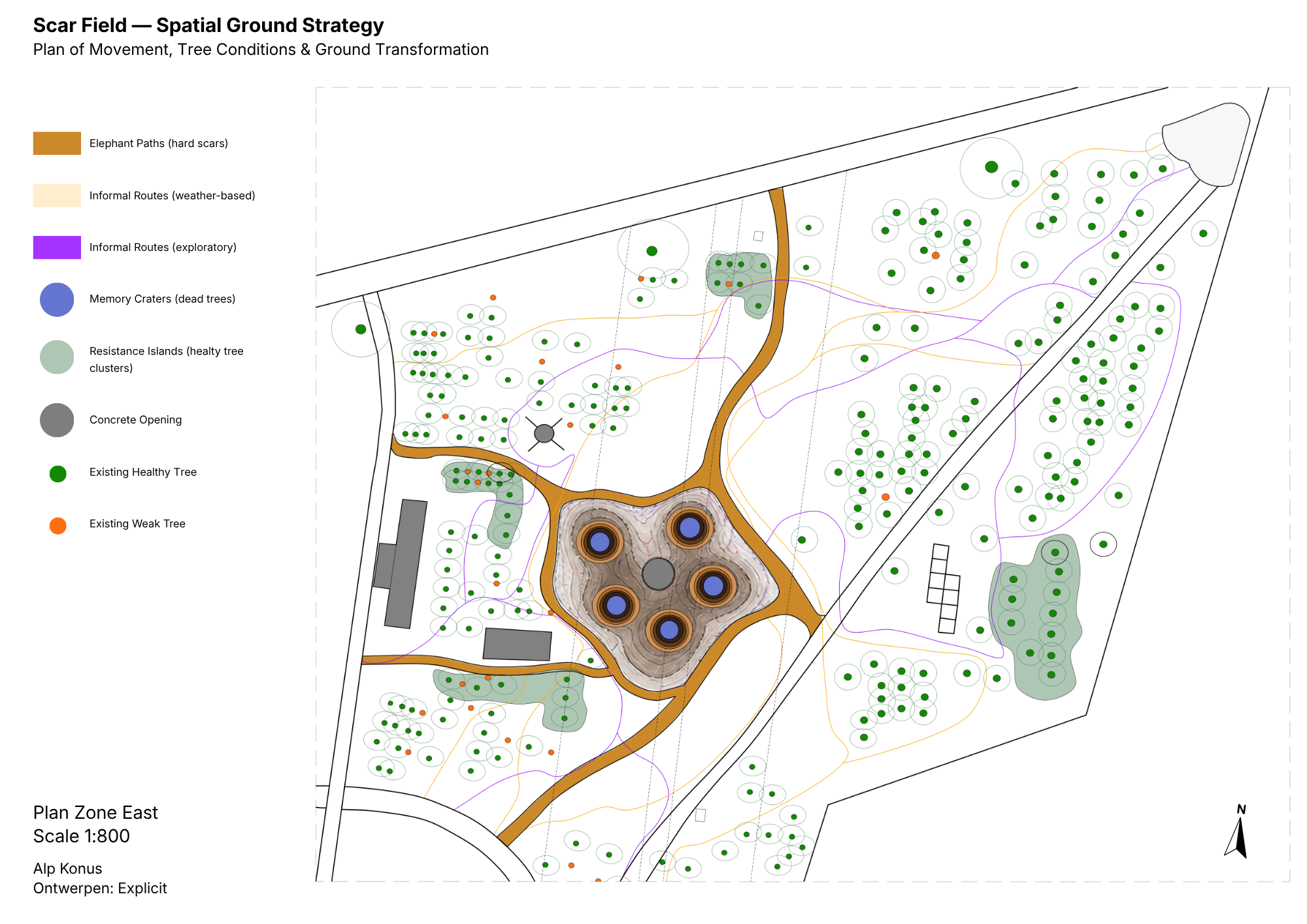
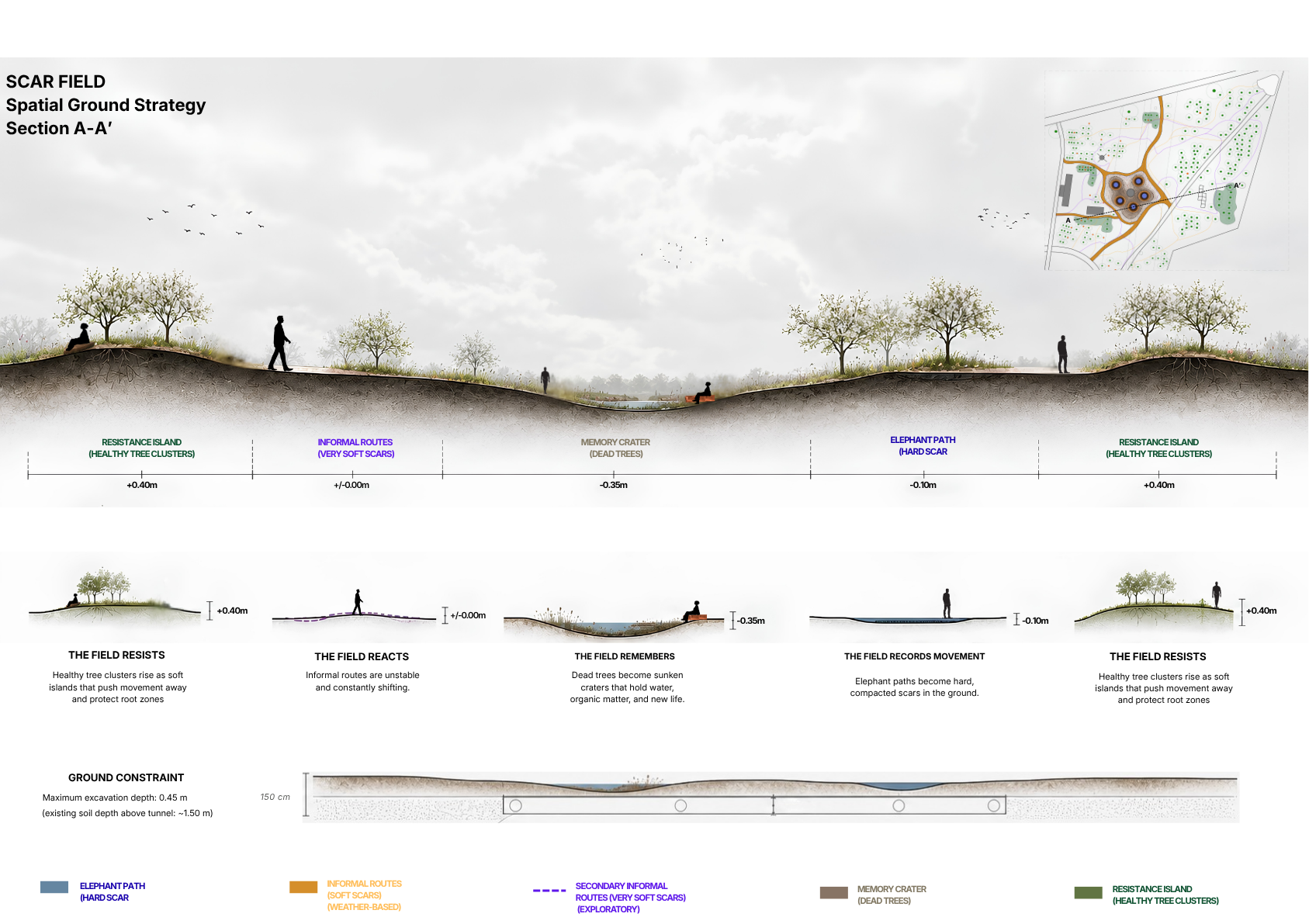
Scar Field Spatial Ground Strategy
From movement to ground
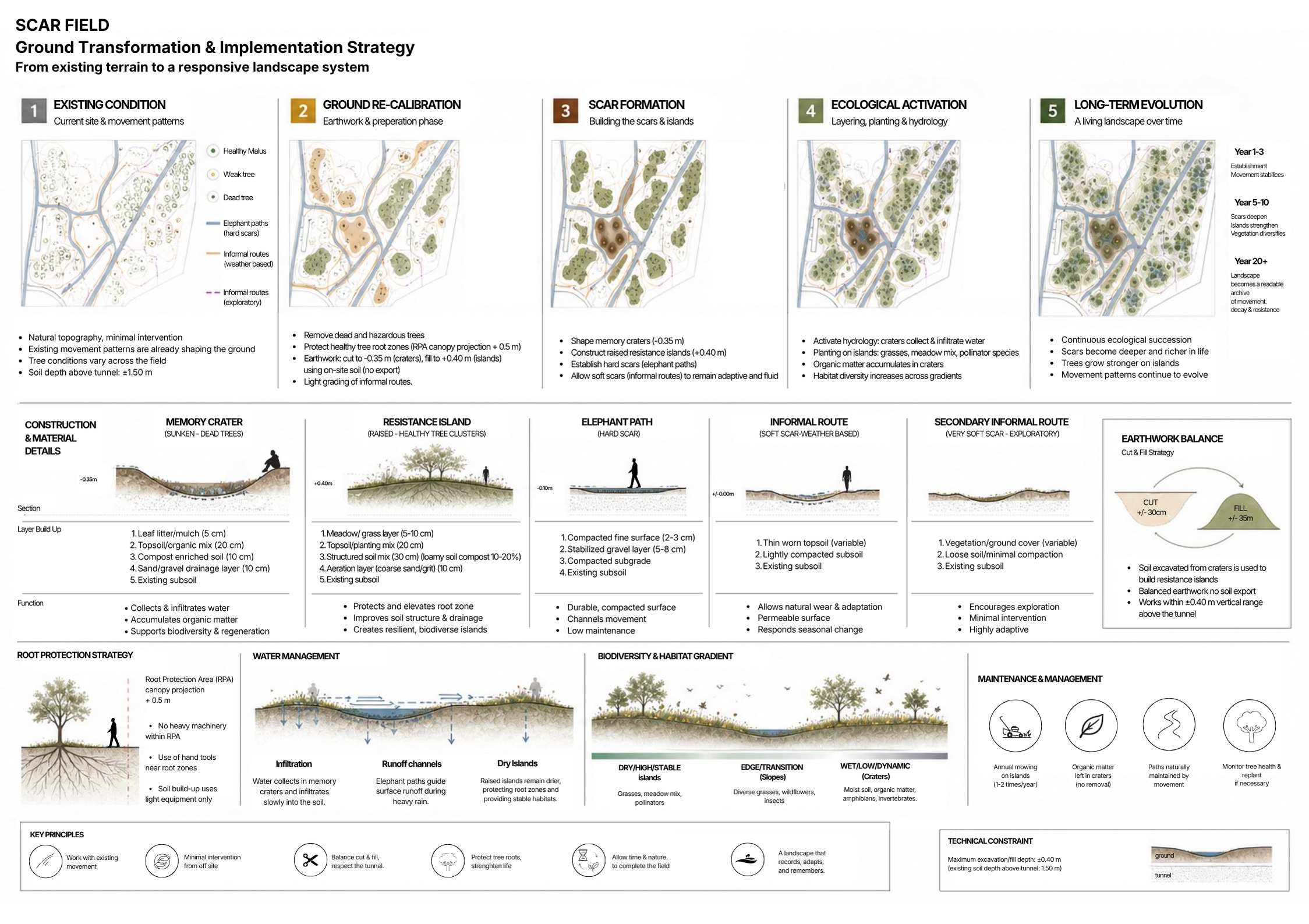
The intervention translates the existing patterns of movement into a new spatial structure. Informal and exploratory routes are retained and intensified, while the existing vegetation determines where the ground can be transformed. Rather than introducing an isolated object, the intervention creates a field of scars, openings and preserved islands across the landscape.
01 — Movement becomes scar
The existing elephant paths become the primary structure of the intervention. These routes are transformed into hard, continuous scars that connect different parts of the site and converge around the central intervention.
02 — Trees resist the transformation
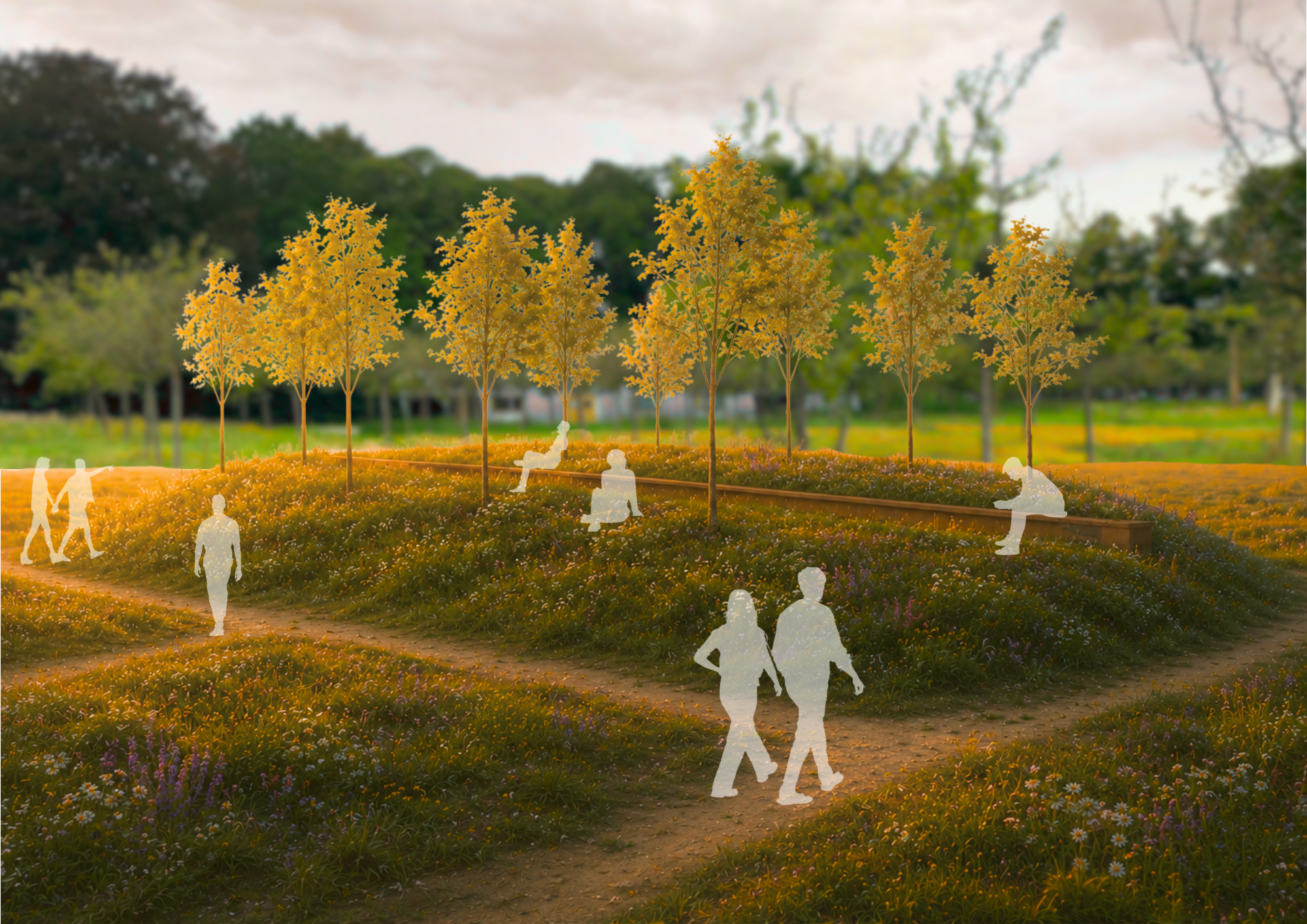
The existing tree structure determines the limits of the intervention. Healthy tree clusters become resistance islands, remaining embedded within the field, while weaker and dead trees create opportunities for new spatial conditions.
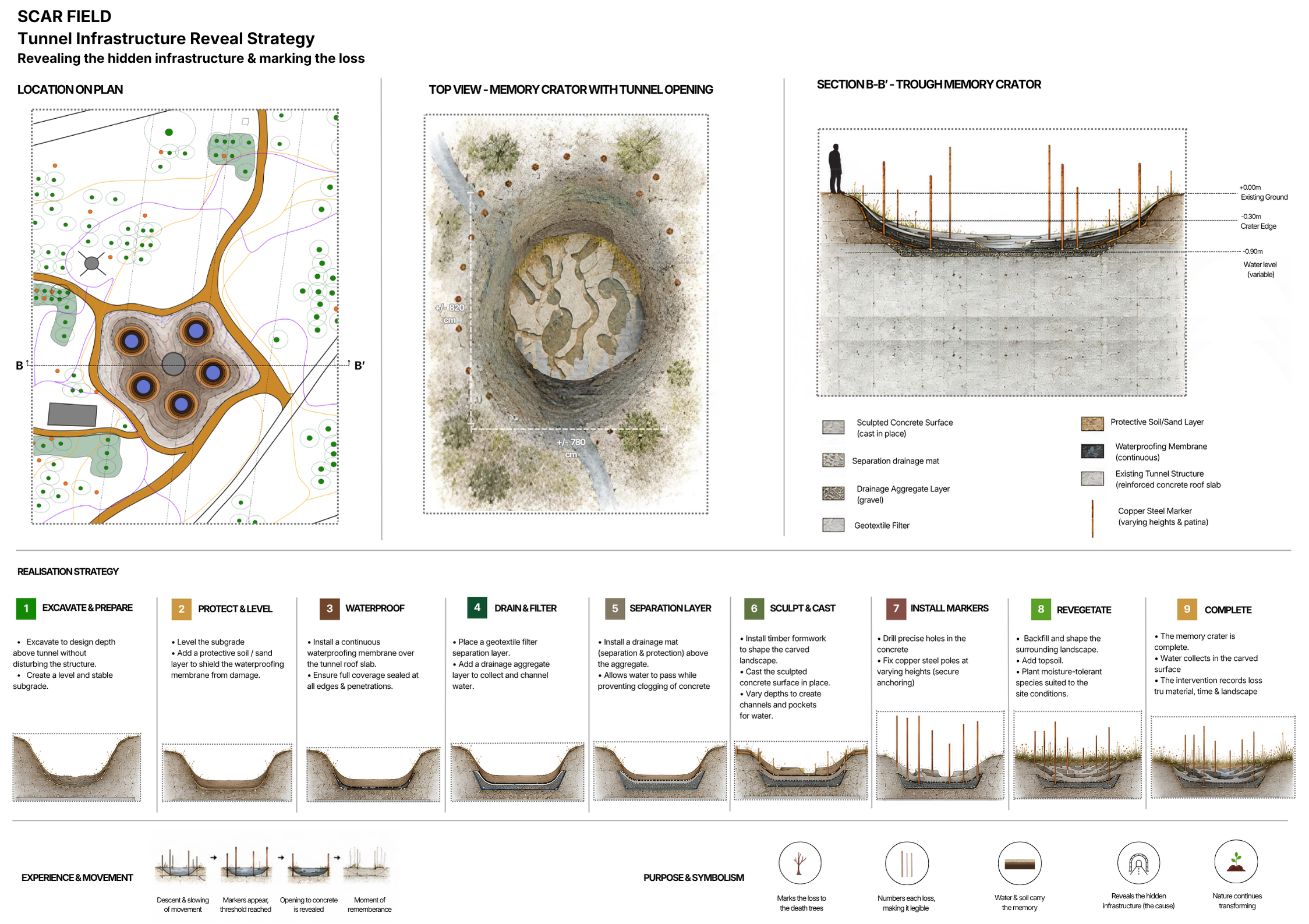
03 — The crater as a point of convergence
At the centre of the field, several movement patterns come together in a large ground intervention. The crater gathers circulation, creates openings in the landscape and transforms the former presence of dead trees into a new spatial experience.