Alp's Room
Obstruction – Immersion — Spatial Installation, Brussels, Belgium
Type: 1:1 Spatial Installation / Autonomous Design
Space: Personal Bedroom
Scale: 1:1
Theme: Resistance & Surrender / Inside & Outside / Enclosure & Immersion
Concept: A textile intervention that transforms the familiar bedroom into an enclosed, tactile environment, exploring the tension between resistance and surrender.
This project explores how a familiar bedroom can be transformed through a simple, temporary intervention. Using layered textiles, the installation creates a small enclosed space that changes how the room is experienced physically and mentally. The intervention plays with boundaries, movement and perception, creating a tension between feeling contained and feeling free.
PHASE 1 -
OBJECTIVE MAPPING
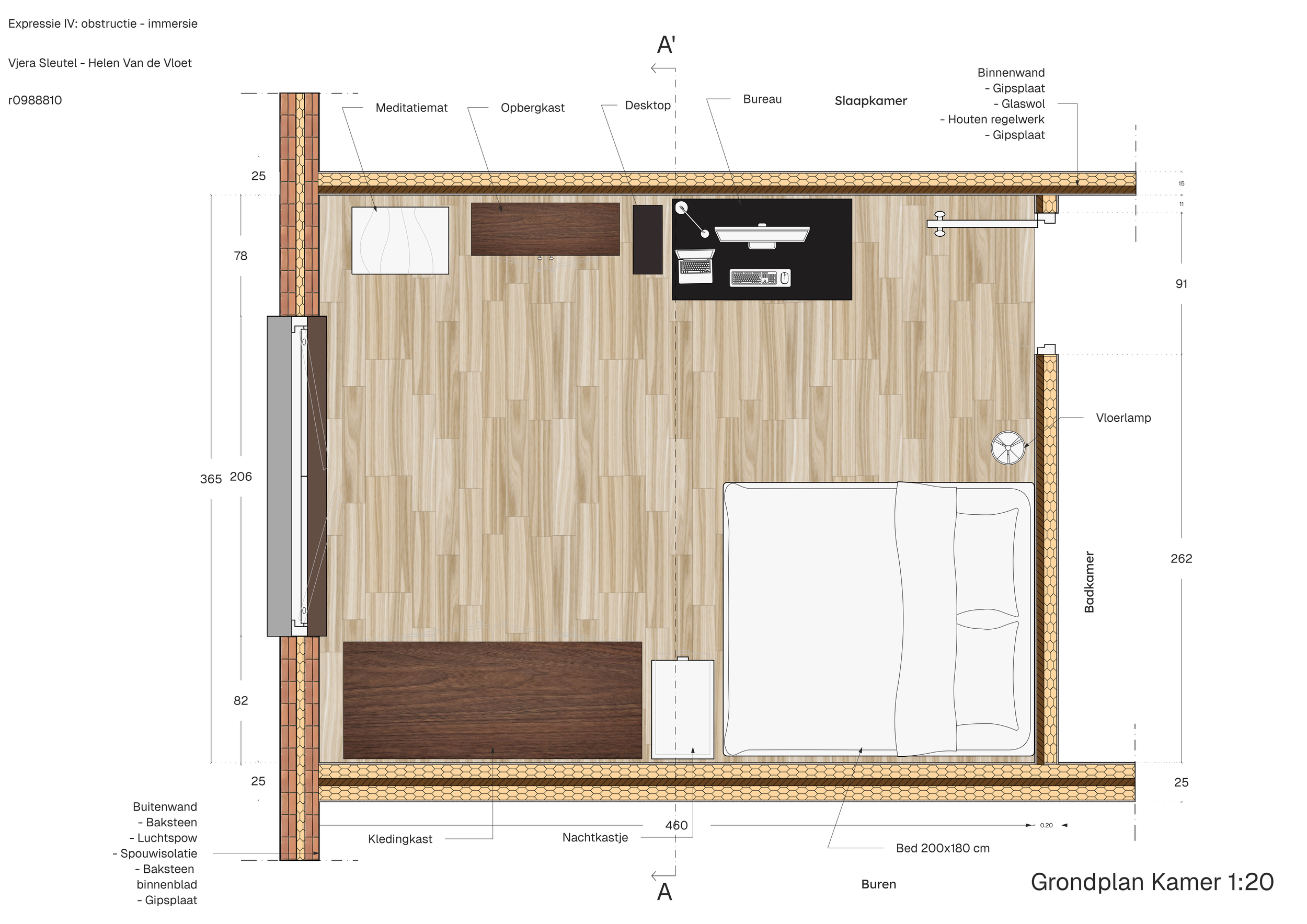
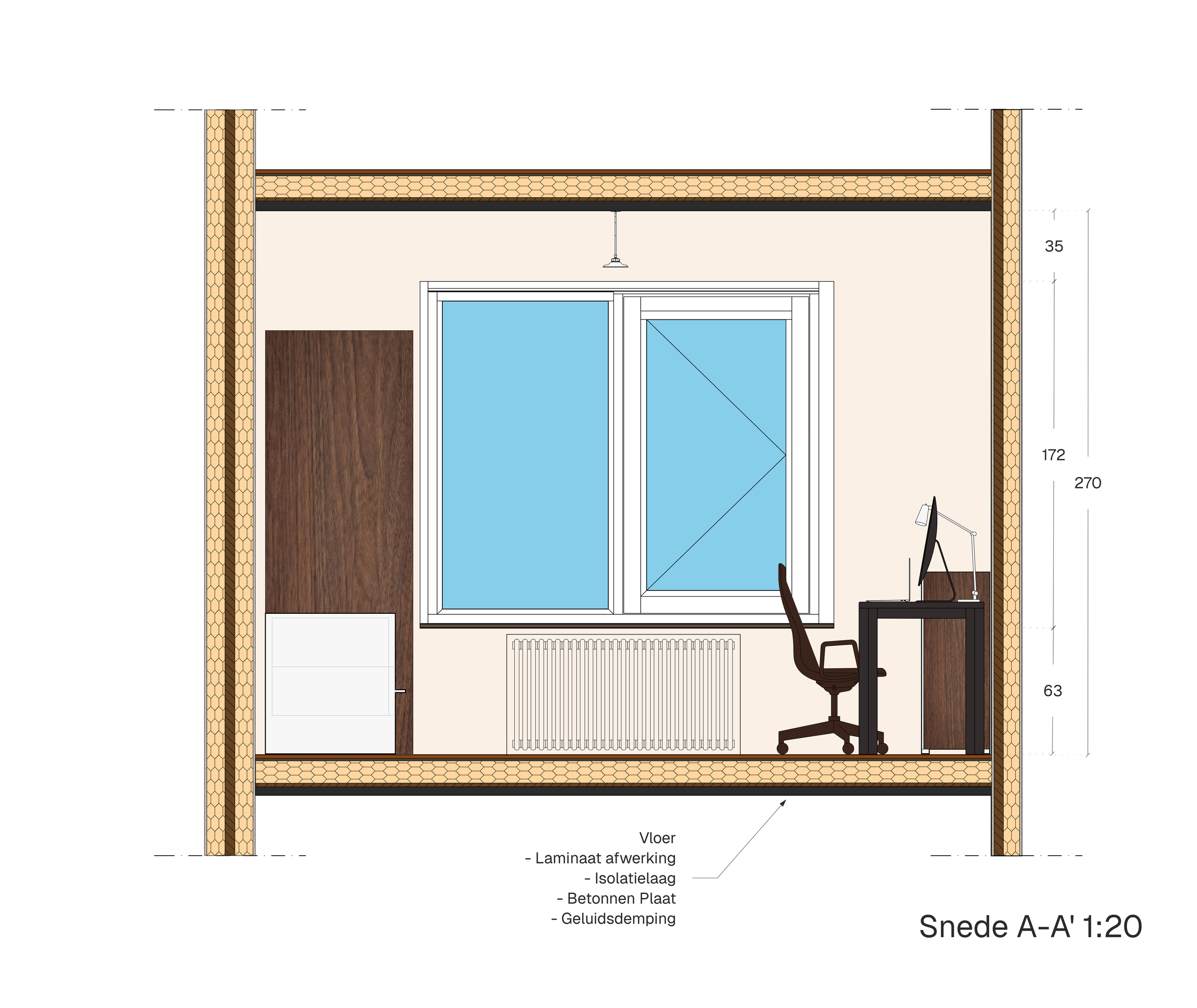
The objective mapping documents the physical characteristics of my bedroom through its dimensions, layout, materials and existing elements. The room measures approximately 365 × 460 cm, with a clear division between the sleeping and working areas. A large window provides natural light, while the existing furniture defines the circulation and use of the space. The mapping establishes the room as a measurable and functional environment before introducing the spatial intervention.
PHASE 2 -
SUBJECTIVE MAPPING
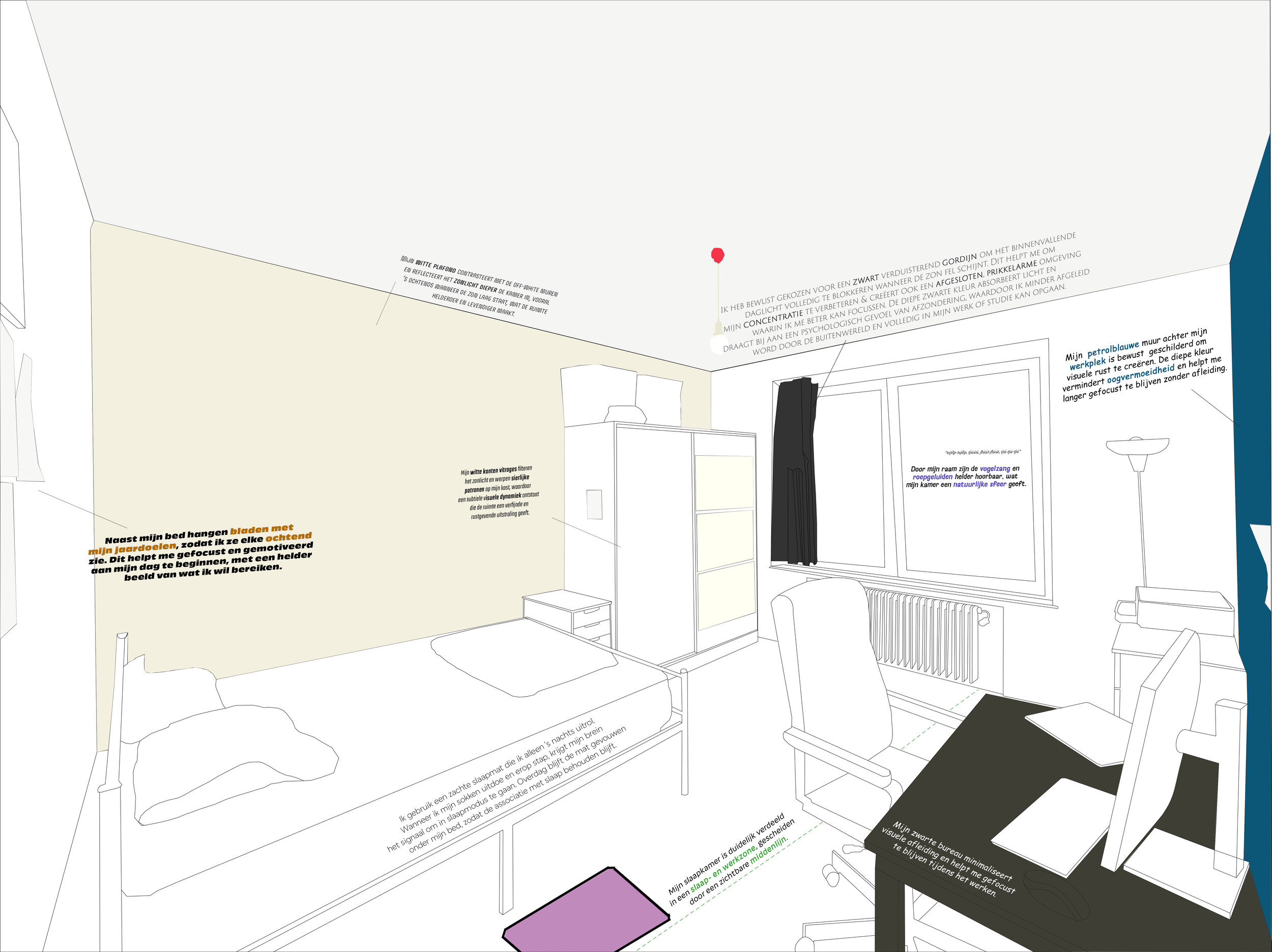
The subjective mapping translates the room from a measurable space into a personal experience. It records how different elements affect my focus, comfort and sense of privacy. Areas of visual distraction, enclosure, routine and relaxation reveal a contrast between the room as a functional space and how it is mentally experienced. These observations became the starting point for the spatial intervention.
PHASE 3 -
SPATIAL INTERVENTION
The spatial intervention translates the observations from the mappings into a 1:1 immersive environment within the existing bedroom. Rather than changing the room permanently, I introduced a temporary structure made almost entirely from textiles. This allows the intervention to work with the existing space while creating a new spatial experience inside it.
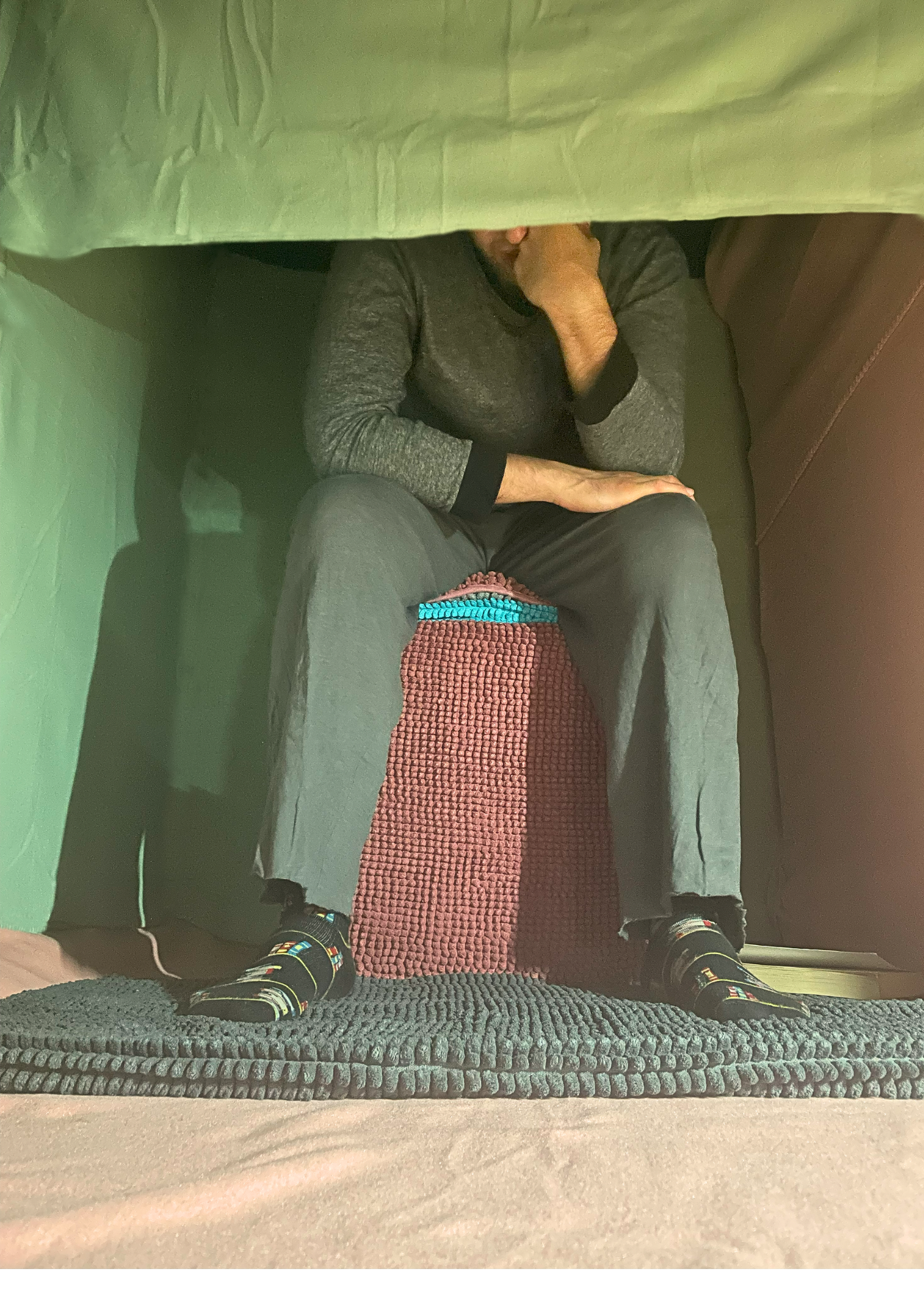
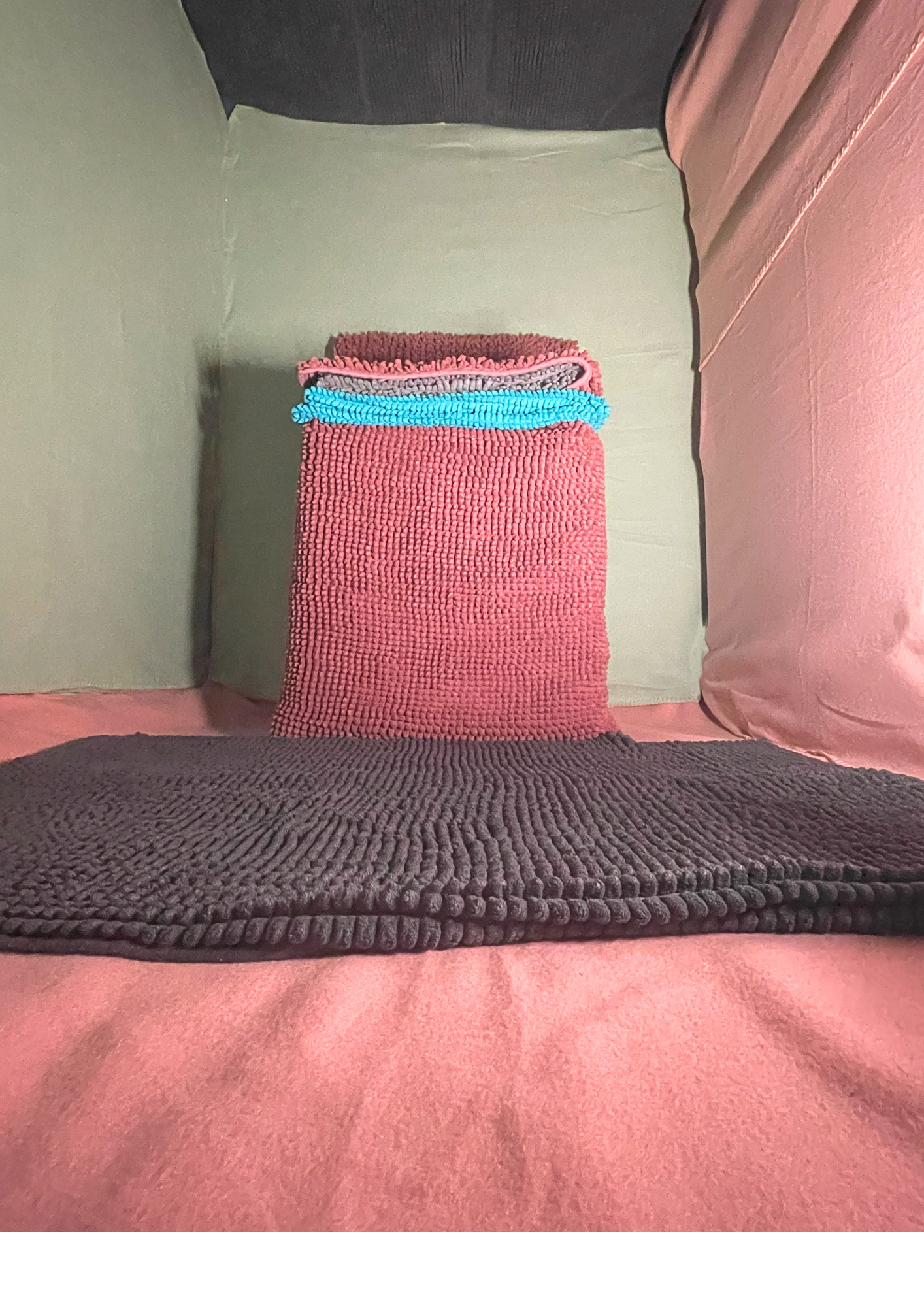
The installation establishes a smaller room within the bedroom. Large textile surfaces are positioned around and above the body, creating a low and enclosed environment that contrasts with the openness of the original room. The intervention therefore changes not only the appearance of the bedroom, but also its perceived scale, boundaries and atmosphere.
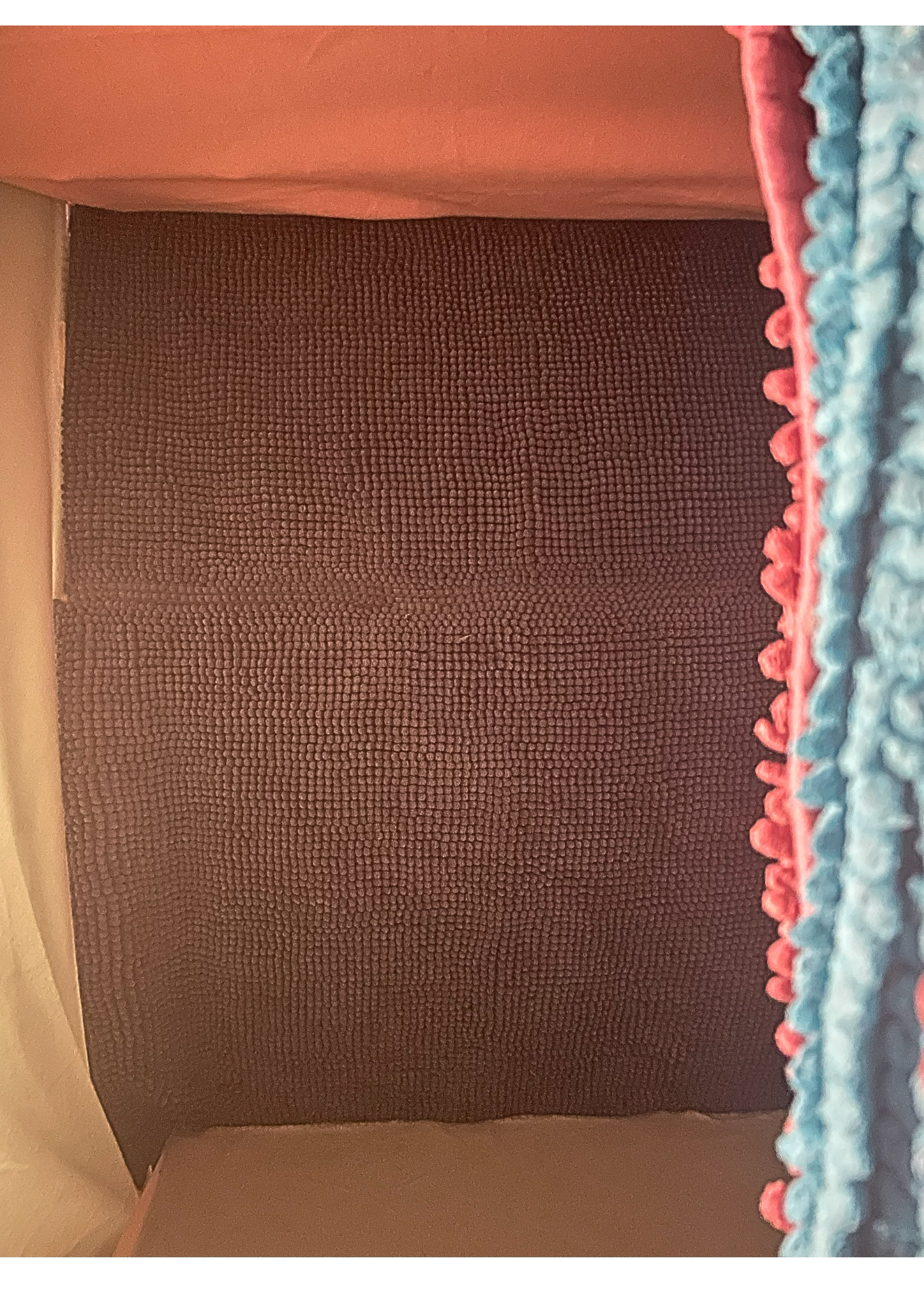
The choice of textiles is intentional. Their soft, flexible and tactile qualities create a sense of comfort and protection, while their physical presence also restricts movement and visibility. This creates the central tension of Obstruction – Immersion: the same material that invites you to enter and surrender to the space also acts as a barrier between the body and its surroundings.
The different layers and colours of the textiles further reinforce this feeling of immersion. Instead of looking at the existing walls, furniture and objects of the bedroom, the user is surrounded by a new material environment. The familiar room becomes partially hidden, creating a temporary sense of separation from the outside world.
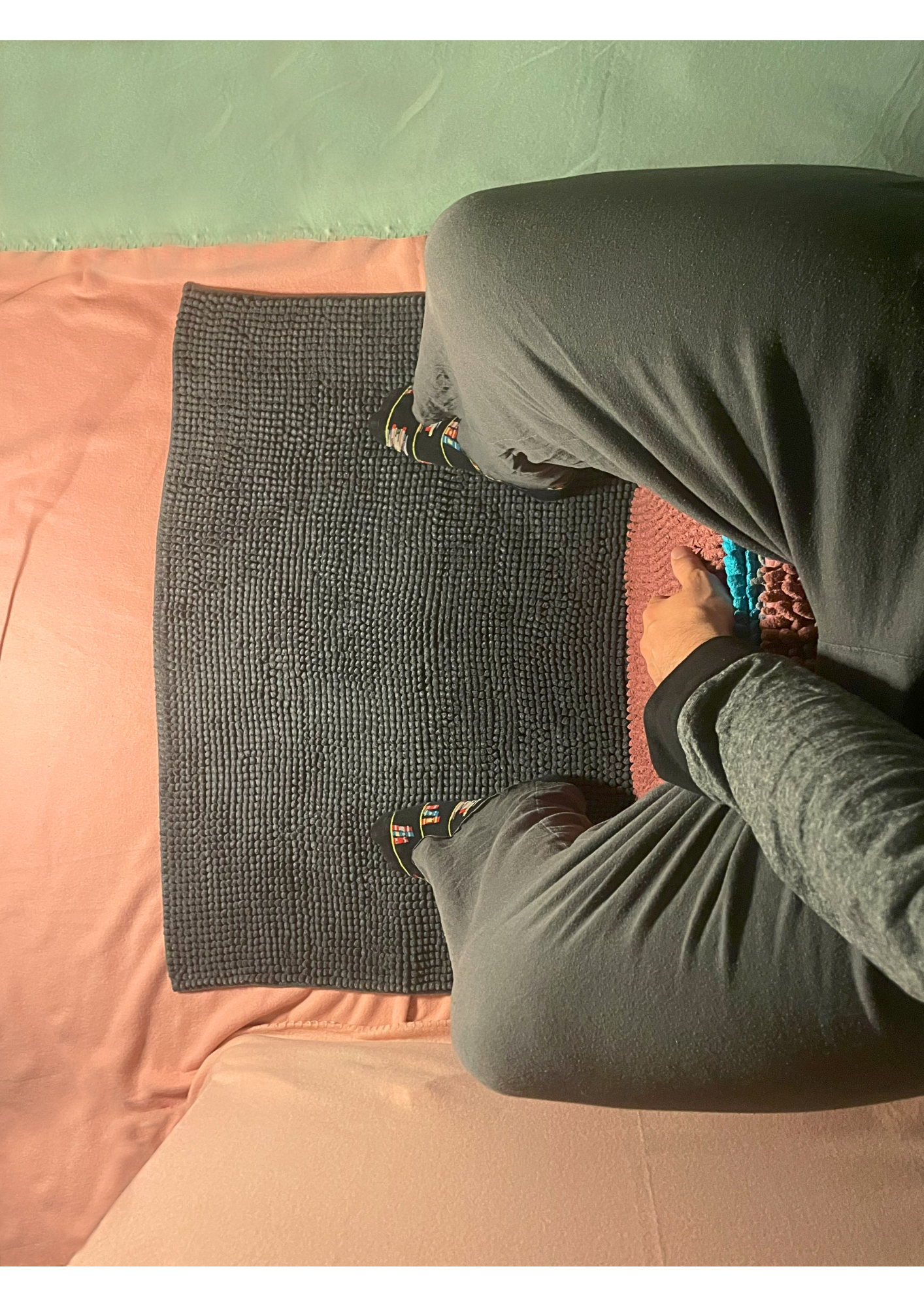
The installation is designed to be physically enterable and mentally enclosing. Once inside, the body occupies the centre of the intervention, while the surrounding textiles define a clear boundary between inside and outside. This transforms the bedroom from a functional everyday space into a more intimate and introspective environment.
Ultimately, the intervention explores resistance and surrender simultaneously: the enclosure limits the body and obstructs the existing room, but its softness and familiarity encourage the user to stay, slow down and give in to the space.
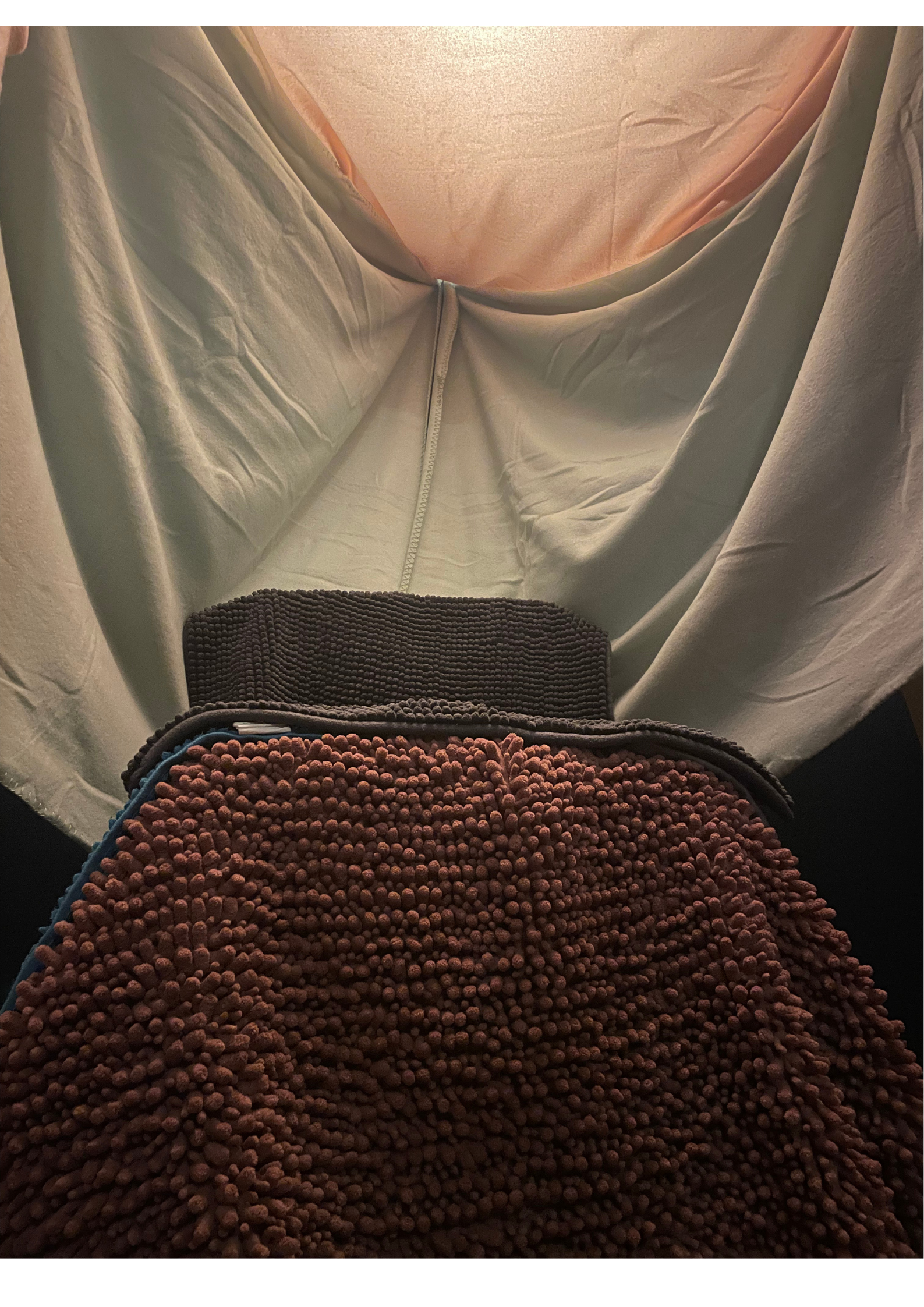
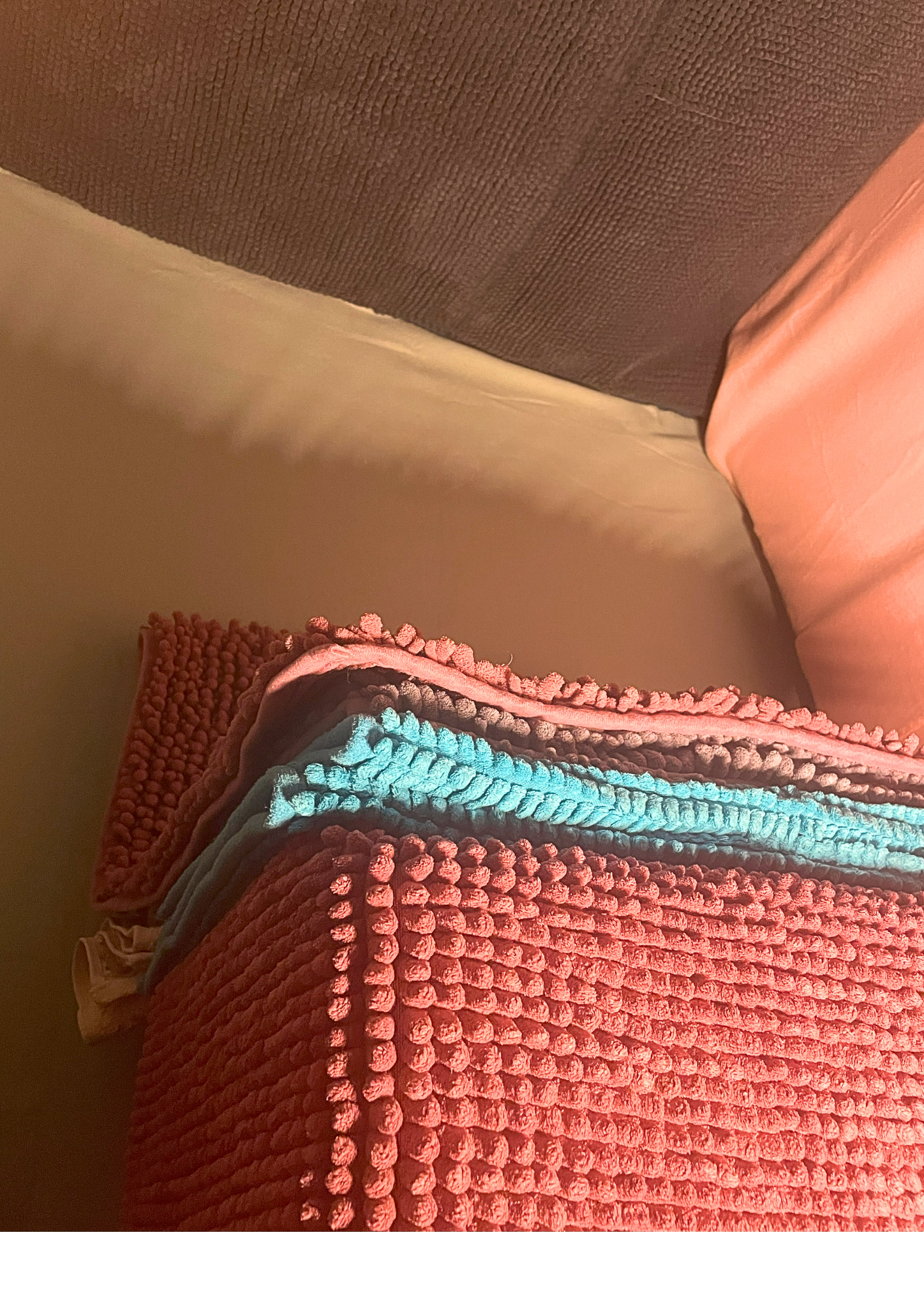
Through this project, I discovered how spatial boundaries can simultaneously restrict and comfort the body, turning a familiar room into a new and immersive experience.
PHASE 4 -
FINAL INSTALLATION
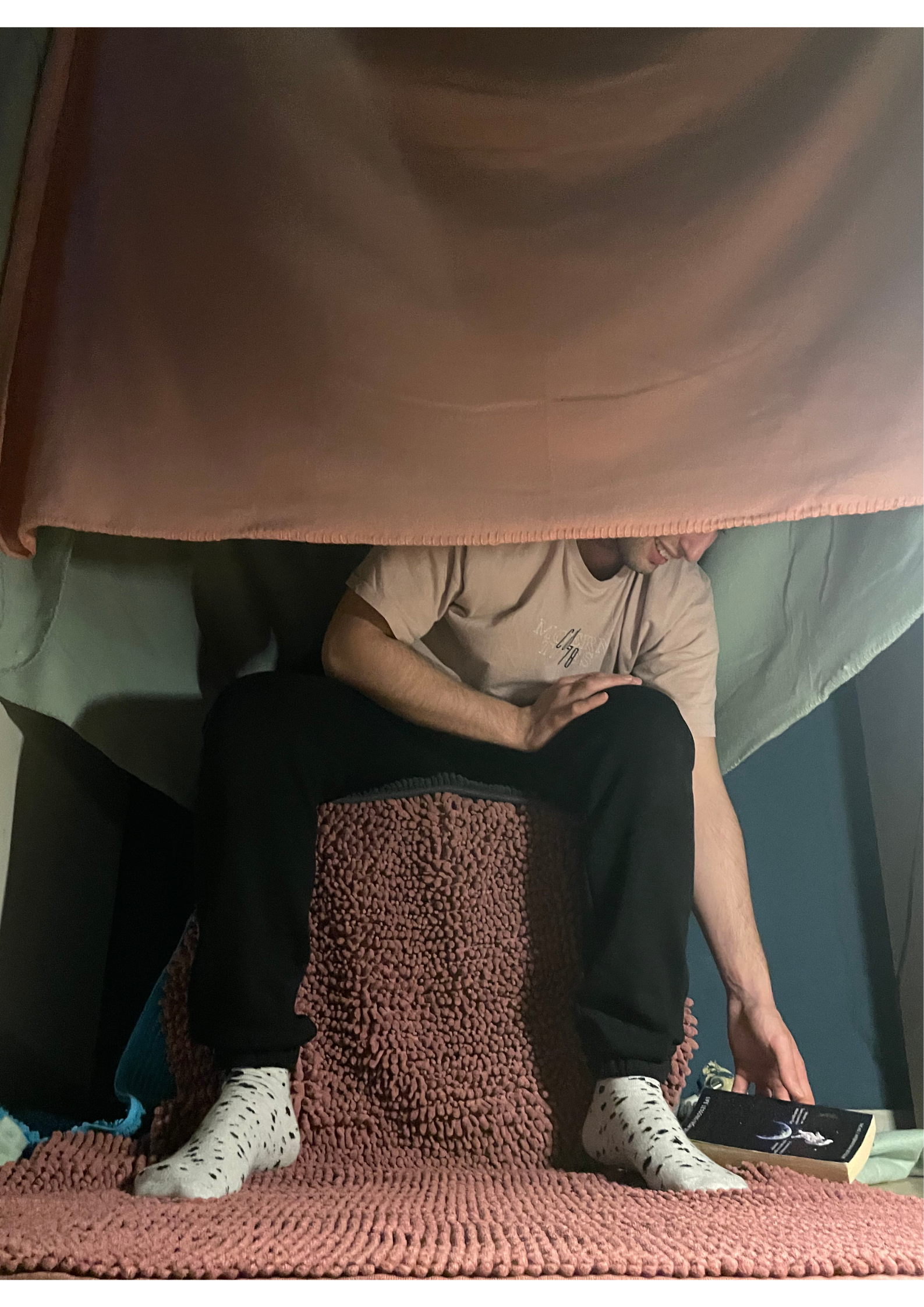
The final 1:1 installation transforms the bedroom into an enclosed environment that can be physically entered and experienced. Through its scale, textile surfaces and restricted views, the intervention creates a tension between obstruction and immersion. The composition of the final photographs was also carefully considered, as the way the installation is framed and presented is essential to communicating its spatial qualities, atmosphere and visual impact.